The Qinghai–Gansu grand loop has no single best month: the Danxia depends on light, the salt lakes on clear skies, Qinghai Lake on rape flowers, and Mogao on reservations. This guide breaks each sight's timeline down by the four seasons to help you decide which month to leave.
There is no uniform answer to "when is the Qinghai–Gansu grand loop most beautiful", because the sights strung along this loop each follow their own seasonal logic: the colours of Zhangye's Rainbow Danxia don't care about the season, but they care intensely about light; Chaka Salt Lake's "mirror of the sky" needs a clear day plus no wind, and is most reliable in summer; Qinghai Lake's beauty is bound to its rape flowers, peaking in July; and Mogao is worth seeing in all four seasons, though booking difficulty in high season differs by several orders of magnitude. So "most beautiful" depends on which stretch matters most to you, and how much price and crowds you can accept.
This guide runs through the four seasons: what you'll see in each, how each sight's timeline stacks up, and what pitfalls to avoid, ending with a month-by-month decision table. One note: seasonal landscapes, flowering times and opening hours are changeable information — check the scenic areas' latest official announcements before you go; the rape-flower season and booking rules in this article draw on current tour product info, and exact dates drift each year. To be clear from the start: the scenery of this loop is "accumulated" — the Danxia, salt lakes, grasslands and grottoes each have their own golden moment and their own temperament, and aligning your timing to them matters far more than rushing down a checklist.
Four seasons, four versions of Qinghai–Gansu
March–May: the trade-offs of low-season quiet and low prices.The northwest is still waking slowly in spring. Qinghai Lake's ice hasn't fully melted in March, the grassland only starts greening in April, and the rape flowers at Daban Mountain don't open until late June. But the low season brings very real benefits: fewer tourists, cheaper flights and hotels, easy Mogao reservations, and the Danxia and salt lakes can be shot slowly without dodging people. Chaka Salt Lake still reflects on calm, clear days — the water is simply cold, so dress warmly and you'll still get fine shots. It suits value-seeking, crowd-averse travellers focused on the Danxia and grottoes; those after green grassland and flower seas should wait another two months.
June–August: the price of peak beauty and high season.This is the most "standard" high season of the loop. Rape flowers bloom along Qinghai Lake, and the lake's blue against the yellow flower sea is the classic picture; the grassland turns fully green with herds beneath the Qilian Mountains; Chaka Salt Lake enters its window of high clear-sky rates and steadiest reflections, and most of the internet-famous glass boats run in this period too. The cost is just as obvious: summer crowds, Mogao tickets to fight for, hotel prices doubled, and scorching midday heat in Dunhuang. If your schedule is flexible, early-to-mid June or late August is the compromise window of "good weather + relatively fewer people".
September–October: the golden season photographers love.In September the northwest enters its most colourful time of the year: Zhangye's Danxia shows clean layering in the low morning and evening light, the poplar forests begin to turn gold (the Jinta poplar forest usually hits its best viewing window from late September to mid-October), and Qinghai Lake's autumn is calm, with noticeably fewer tourists than in summer. October is another dividing line: after the National Day peak, some scenic areas and lakeside accommodation start drifting into low-season mode from mid-month, with morning and evening temperatures nearing freezing. For autumn colour without the National Day crowds, mid-to-late September is the best window.
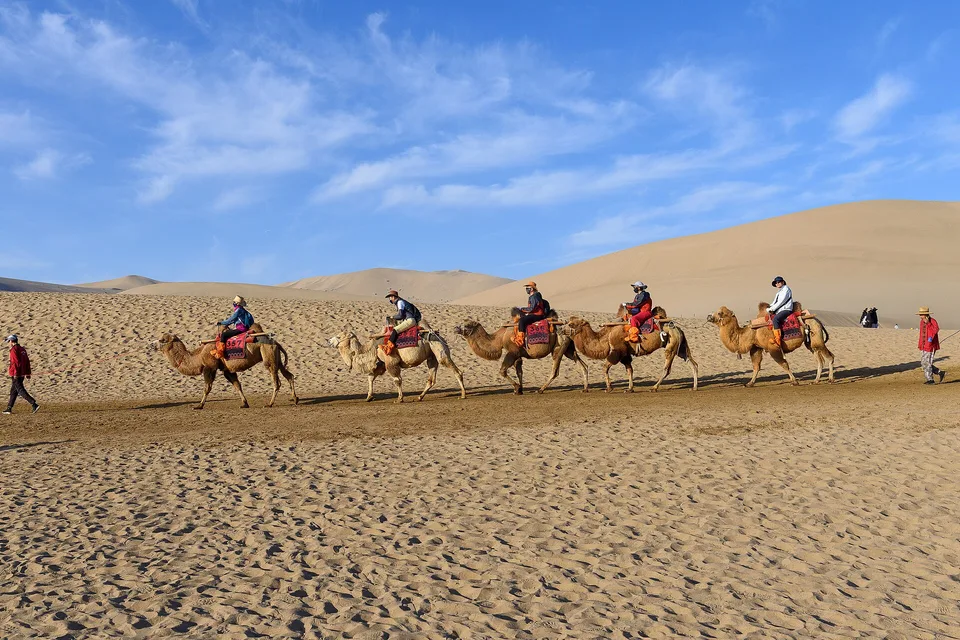
November–February: an extreme winter, reserved for committed travellers.Winter in Qinghai–Gansu is another kind of beauty: Qinghai Lake freezes into a giant mirror of ice; the salt crusts of Chaka and Emerald Lake glint coldly after snow; and the camel trains of Mingsha Mountain still photograph beautifully in the sunset. The cost is low temperatures (mostly below zero by day), some restaurants and hotels closed for the season, and shortened opening hours at some sights. This is the year's emptiest and cheapest period, suited to cold-tolerant photography lovers chasing snow scenes and frozen lakes and the "this whole world is mine" feeling.
Seasonal timeline of the five core sights
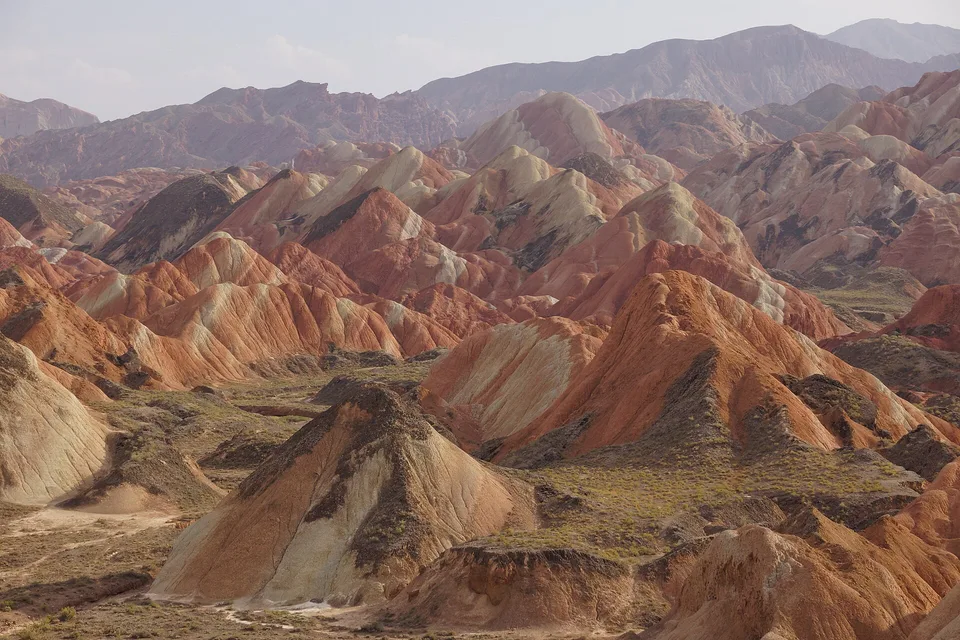
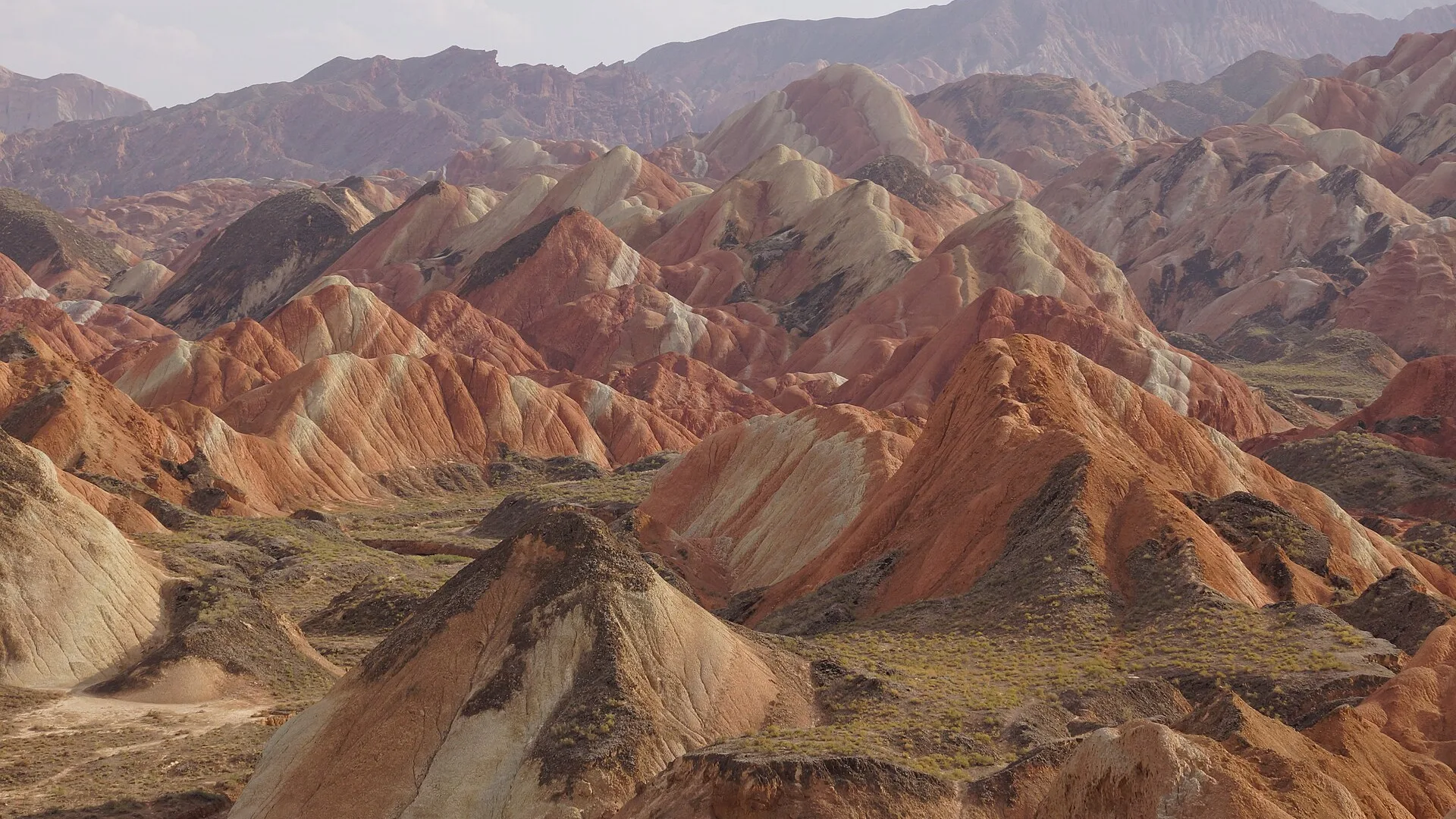
Zhangye Rainbow Danxia: light matters more than season.The Danxia's colours are the minerals' own, barely different across the four seasons — what really shapes the view is the light. Around sunrise and in the half hour before sunset the hillsides are at their most saturated; rain-washed Danxia saturates even more, which is why so many photographers hope for "clear skies after rain". Scheduling-wise, catching the Danxia in the late-afternoon session photographs far better than at noon.
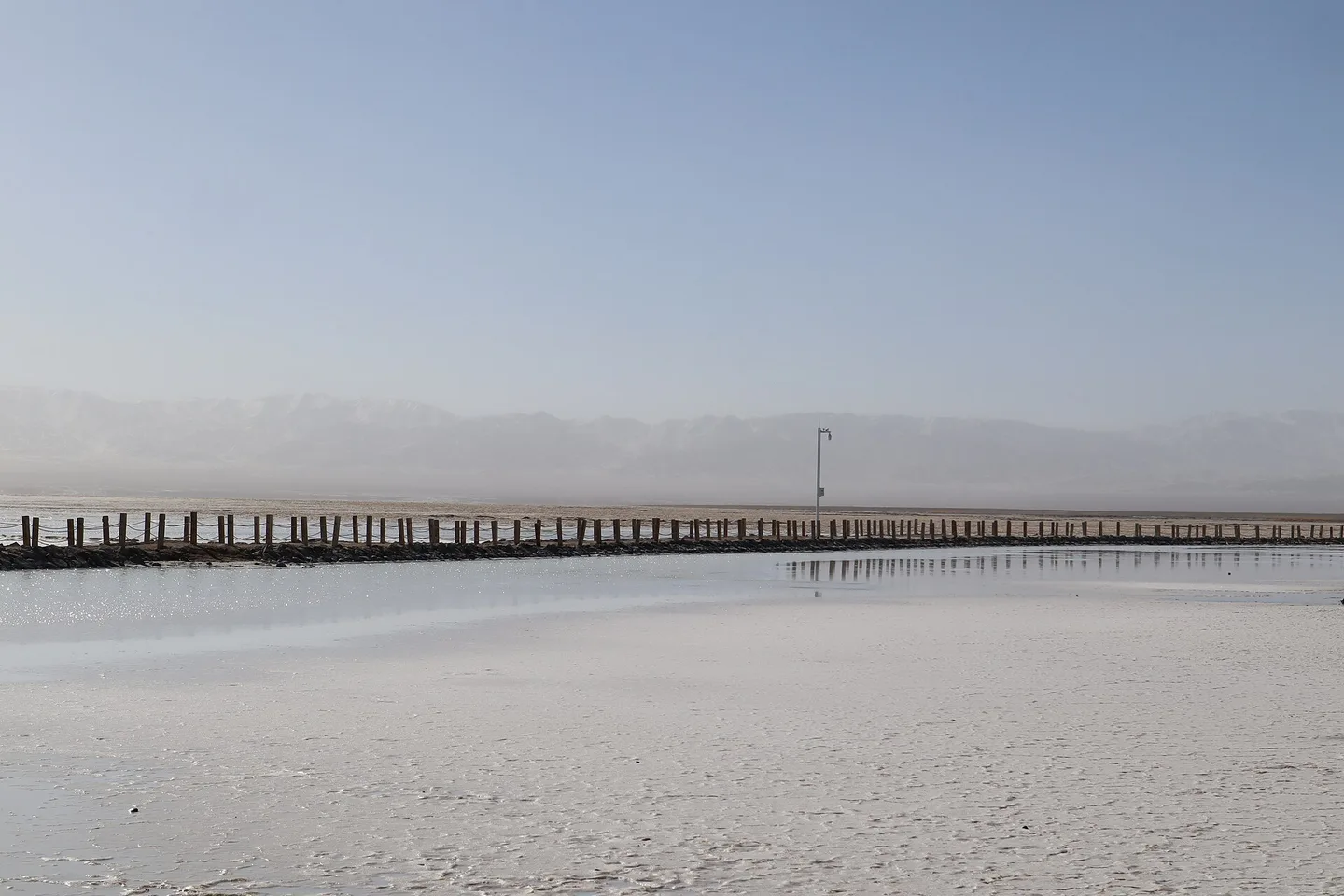
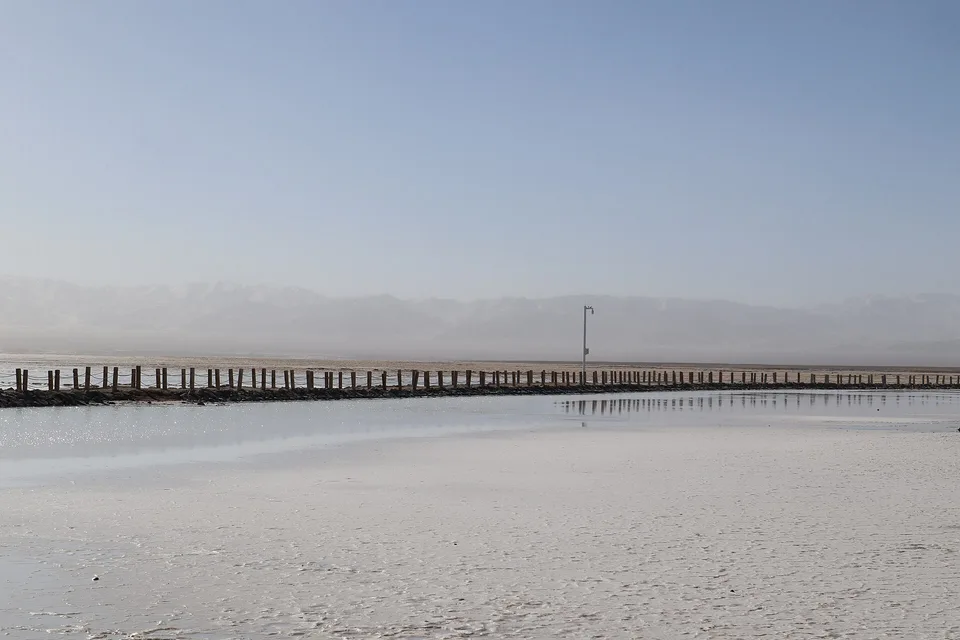
Chaka Salt Lake: clear day + no wind + water level — miss any of the three and it's wasted.The mirror-of-the-sky effect is essentially a reflection on the lake surface, which needs three conditions at once: no wind, a thin layer of water and a clear day. June–August has the highest clear-sky rates and comfortable water temperature; after September reflections are still possible, but the water turns cold, so bring thick socks or shoe covers. The best shooting times are around 9 am and around 5 pm, when the light is soft and the reflection clear. On overcast or windy days the salt lake pales considerably, so give the salt lake flexibility in the itinerary, or schedule it for a forecast-clear day.
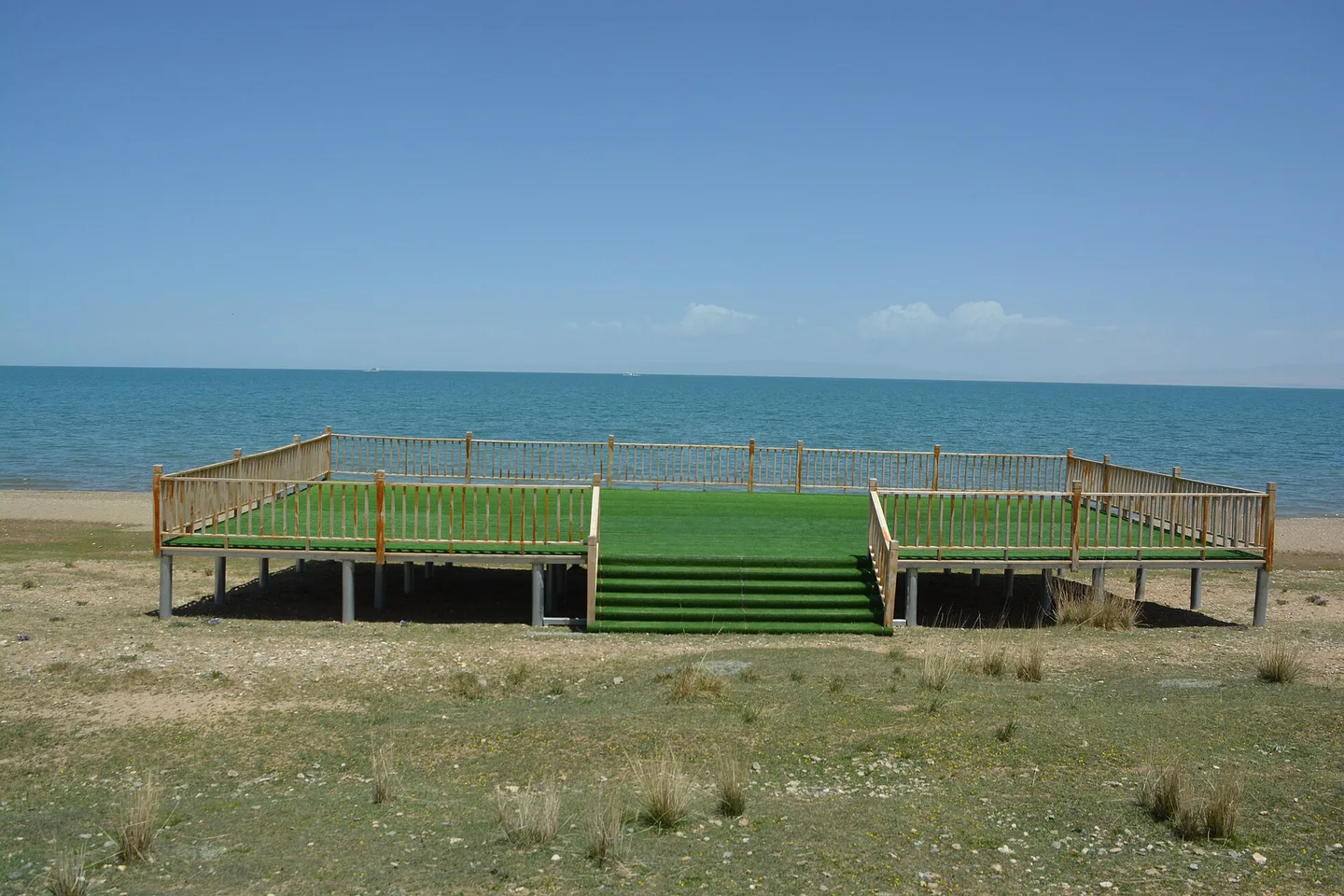
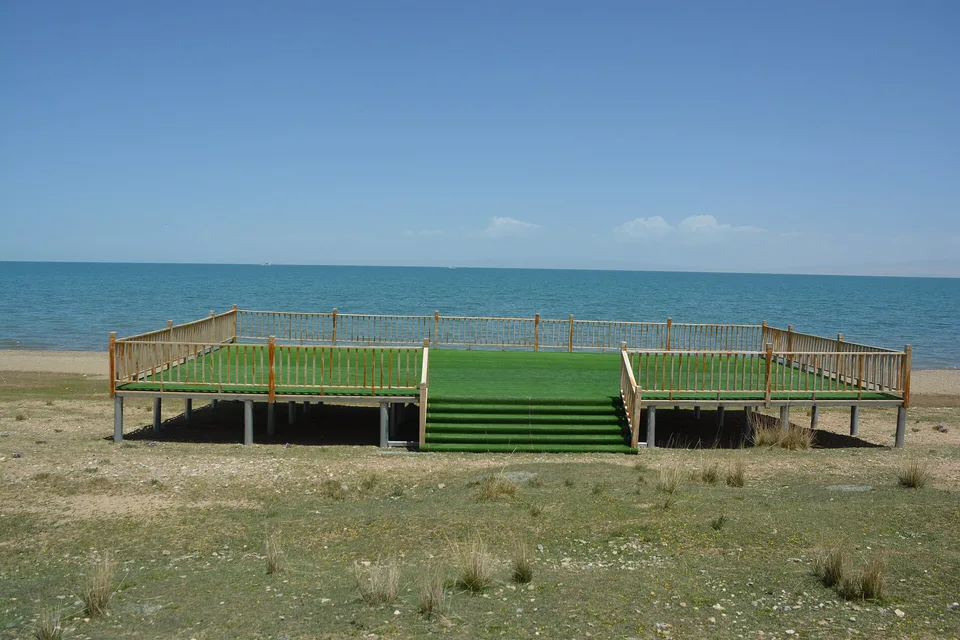
Qinghai Lake: the July rape flowers are the peak answer.Qinghai Lake's own blue is beautiful in every season, but the classic "lake + rape flowers" picture belongs only to late June through early August, peaking in July. For the flower sea, lock in that window; after September the flowers fade, but the lake's deep blue and the autumn grassland are a different kind of stillness. From December to February the lake freezes over — ice-lake photography season.
Mogao Grottoes: fine in any season; high season is a booking battle.The grottoes' cave art has nothing to do with the season — the difference is all in reservations. In high season (especially summer and National Day) tickets are tight; officials usually release them 30 days in advance. B tickets cover 4 caves, while A tickets include the digital cinema and cover 8. When planning, treat the Mogao reservation date as the "anchor" of the whole loop rather than booking flights first and scrambling for tickets later.
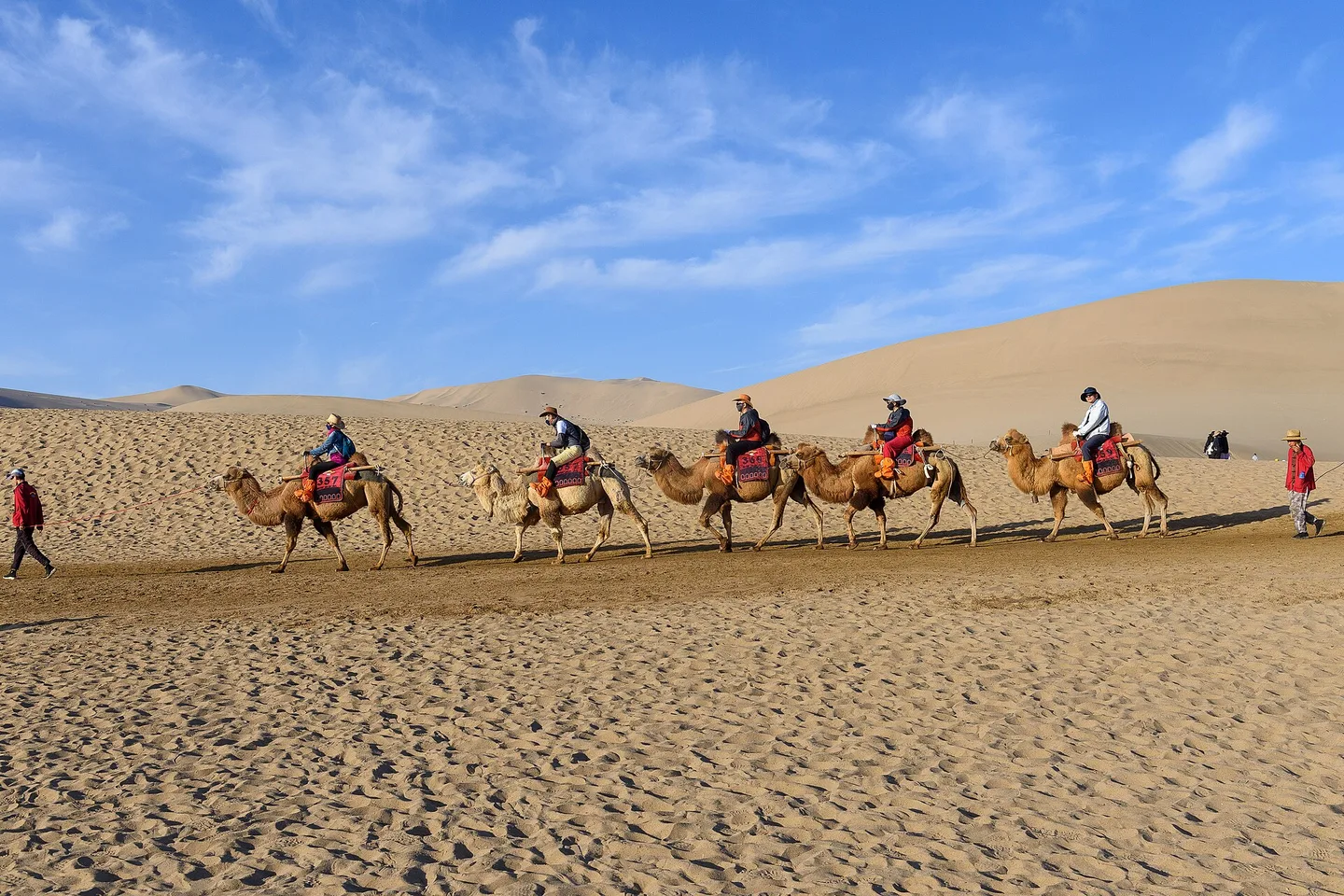
Mingsha Mountain and Crescent Lake: sunset is the eternal keyword.The desert scenery suits all four seasons; what really decides the experience is the sunset window — climbing the dunes to watch Crescent Lake gilded by the setting sun is the loop's most photogenic moment. Summer sunsets come late (after about 7:30 pm) and winter ones early, so arriving 1.5 to 2 hours before sunset is the most sensible timing. Camel rides and sand-sledding also run in winter, just with more wind-blown sand — guard against both.
Month-by-month decision table: decide your departure month in one minute
| Period | Who it suits | Core sights | Main trade-offs | | ---- | -------- | -------- | -------- | | Mar–May | Value seekers, crowd-averse | Danxia, grottoes, salt-lake reflections | Grassland not green, Qinghai Lake still frozen | | Jun–Aug | First-timers, family trips | Rape flowers, green grassland, clear-sky salt lakes | Crowds and high prices, hard-to-book Mogao tickets | | Sep–Oct | Photographers, off-peak | Autumn Danxia, poplars, lakes | National Day peak, low season from mid-month | | Nov–Feb | Snow photography, deep travellers | Frozen lakes, snow scenes, minimal crowds | Bitter cold, some facilities closed |
What should you prepare before departure?
Qinghai–Gansu has extreme day–night temperature swings, with mornings and evenings near 0°C — carry a windproof jacket or light down in any month; protect against the sun by day in summer and dress for full-body warmth in winter.
The Qinghai stretch sits at about 2,800–3,000 metres; most people acclimatise in 1–2 days. Slow your pace and protect your sleep; those with heart or blood-vessel conditions should consult a doctor in advance.
Wear shoe covers or slippers into the salt lakes — the salt crust is rough and there are dissolution holes below the surface, so don't wade too deep; on clear days the UV and the glare off the lake are fierce, so sunscreen and sunglasses are essential.
Mogao and Mingsha Mountain run reservation and capacity controls — follow the latest official rules, and book well ahead in high season.
Drives between sights are long, reaching hundreds of kilometres a day — pack motion-sickness pills, high-energy snacks and plenty of water.
Closing words: decide the picture you most want first, then the month
The Qinghai–Gansu grand loop has no "standard answer" because its scenery isn't a single photograph but a string of pictures each defined by a different season: the reflection joining your feet to the sky at Chaka, the blue ringed by rape flowers at Qinghai Lake, the colours of a thousand years ago inside Mogao, and the camel-train silhouettes the setting sun throws across Mingsha Mountain. Figure out which picture you most want to take home, then work backwards to your departure month and travel rhythm — far more sensible than fixing the date first and agonising over "will it look good then".
If you still can't decide, tell us your travel time, days and the scenery that matters most. 0765trip will build a fitting 8-day Gansu–Qinghai grand loop around the seasonal windows and booking availability: Zhangye Danxia, Mogao, Mingsha Mountain and Crescent Lake, Emerald Lake, Chaka Salt Lake and Qinghai Lake in one trip, with signature meals and upgraded hotels throughout, and scenic-area tickets and reservations arranged in advance. Whatever month you leave, this loop will leave you a northwest memory laid out along the whole road. Before you go, remember to recheck the flower seasons, reservations and weather — everything should be subject to the latest official announcements.