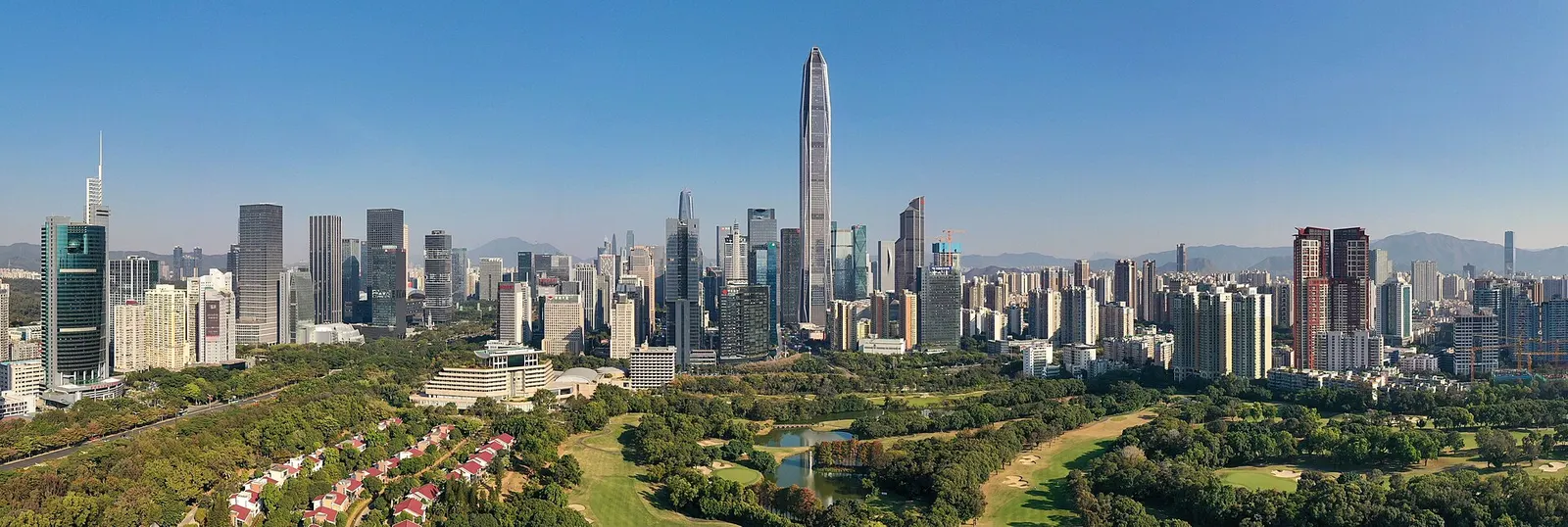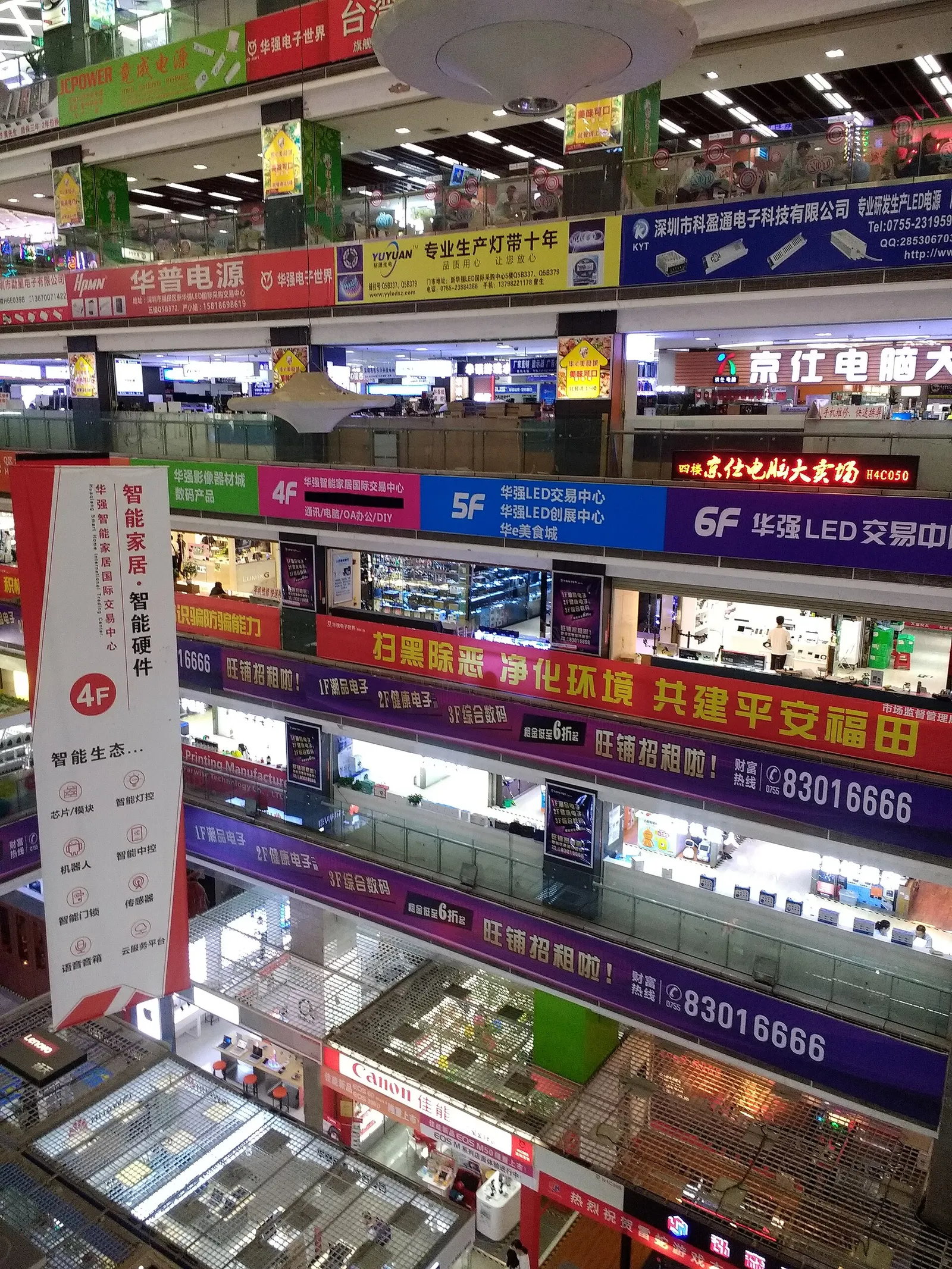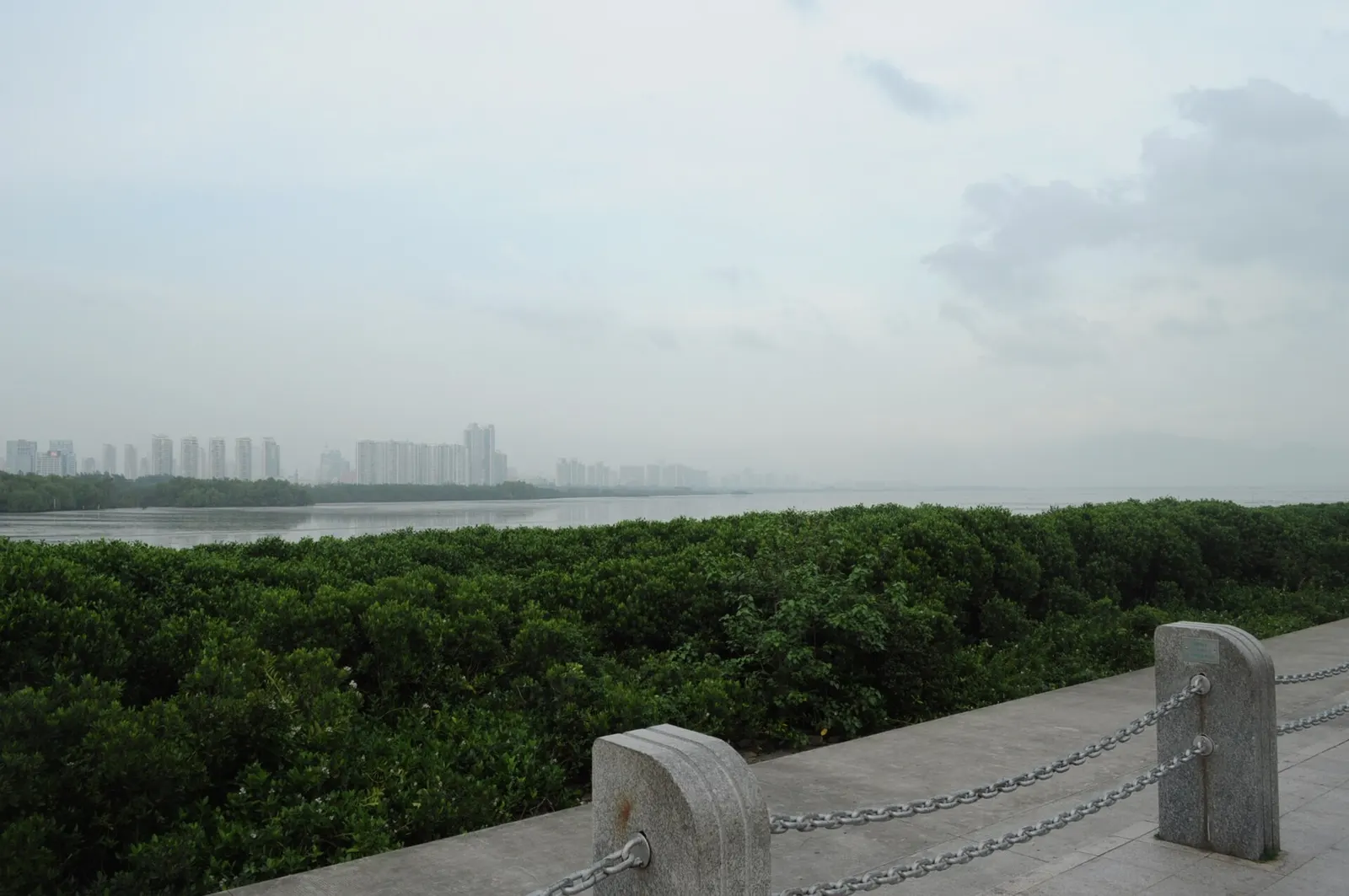
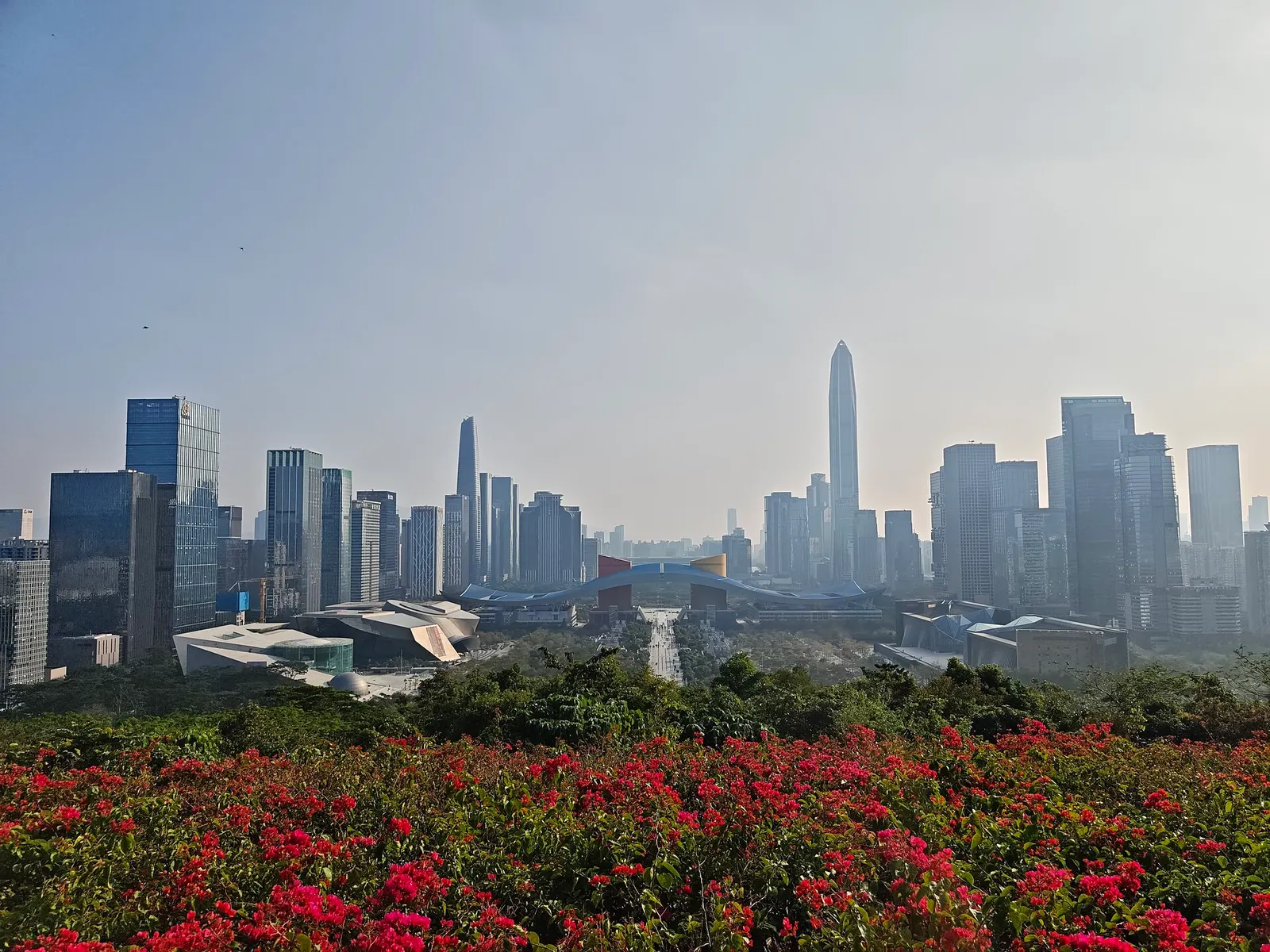
Shenzhen is not a city of antiquities. What it offers is how contemporary China actually runs: the Futian CBD seen from Lianhua Hill, the electronics markets of Huaqiangbei, the coastline at Shenzhen Bay and Dapeng, and the border crossings that link to Hong Kong. One to two days covers the main line, and placing it between Guangzhou and Hong Kong is the simplest arrangement (checked 28 September 2026).
On any list of Chinese cities, Shenzhen is the hardest to introduce through its sights. It has almost no ancient remains and no district famous for history. What puts it on an itinerary is usually a different set of things: a sample of contemporary Chinese urbanisation、one of the world's largest electronics markets、cross-border ports directly linked to Hong Kong, along withan underrated coastline。
These happen to suit first-time visitors well. If you have already seen the history of Beijing and Xi'an, or the Jiangnan of Shanghai and Hangzhou, Shenzhen fills in how China grew over the past forty years: from the summit of Lianhua Hill you take in the whole Futian skyline at a glance, and the civic centre and library below are the city's most contemporary space; Huaqiangbei's electronics market shows a different order — counters, hand carts, and a dense division of repair and parts work.
Shenzhen's other practical value is its location for transport: it sits between Guangzhou and Hong Kong, about half an hour from Guangzhou by high-speed rail, with several crossings into Hong Kong. Put Shenzhen after Guangzhou and before Hong Kong and the route flows; treat it as a city you pass through for one night and its character stays invisible.
This guide is for travellers placing Shenzhen in a 7 to 12 day China route: how many days it needs, what to see, what to skip, where to stay, how to connect to Hong Kong, and practical matters such as typhoon season and queues at the crossings.
Is Shenzhen right for a first trip to China?
Yes, but place it correctly: Shenzhen offers the look of contemporary China, not historical depth. If your itinerary needs world-class historical symbols, Shenzhen belongs after Beijing and Xi'an; if urbanisation, technology and business ecosystems interest you, Shenzhen is an informative stop.
It also does something no other city can: a south China transport hub. Guangzhou is about half an hour away, there are several crossings to Hong Kong, and high-speed trains run to Xiamen, Guilin and Changsha — useful as the connecting point of a south China stretch. How to combine cities and split the days is covered here: which cities to visit on a first trip to China.
How many days does Shenzhen need?
One to two days is enough, depending on which side of the city you want.
- Half a day: the skyline from Lianhua Hill plus one shopping centre or old street — a stopover visit.
- One day: Lianhua Hill, the Futian CBD and Huaqiangbei, then a walk around Shenzhen Bay in the evening. The main line is covered.
- Two days: on the second day choose one direction — cycling at Shenzhen Bay, the Dapeng peninsula coast, or a theme park.
- Three days or more: add Dongguan or Huizhou, or split Shenzhen into a city day, a coast day and a Hong Kong day.
What to see first, and what to skip
The test in Shenzhen is whether this space represents something real about contemporary China, not whether it counts as a sight.
| Place | For a first visit | Why |
| Lianhua Hill Park (the summit platform) | Must go | The whole Futian CBD skyline at a glance — the most direct place to understand Shenzhen |
| Futian CBD and the civic centre area | Strongly recommended | A sample of contemporary urban planning, dense with libraries, concert halls and pedestrian space |
| Huaqiangbei electronics market | Advice | A globally known cluster of electronics markets — one face of the business ecosystem |
| Shenzhen Bay Park | Advice | Seafront cycling and walking paths, best in the late afternoon, looking across towards Hong Kong |
| Dapeng peninsula coast | Separate day | The best natural scenery in Shenzhen, needing a full day and a longer drive |
| OCT Loft creative park | Optional | A design quarter converted from old factories, good for anyone interested in design |
| Theme parks (Window of the World and similar) | Can skip | A full day each and in a different direction from the centre; better for families or a second visit |
| Dongmen old street | Pass through | An old commercial street — fine as you pass through |
| High-floor observation decks (Ping An Finance Centre and similar) | Optional | Decide by weather and queues — Lianhua Hill shows the same skyline |
| Glass-walled shopping malls | Pick one | They differ little; no need to tour them all |
In one line: Shenzhen's core is not sights but seeing how a contemporary city runs — the layout from Lianhua Hill, the commerce of Huaqiangbei, the daily life along Shenzhen Bay.
When to go, and how to dodge the crowds
- October to December: the best period — cooler and drier, good for long hours outdoors and by the sea.
- March to April: temperatures rise, with occasional damp spells and drizzle, and fairly high humidity.
- May to September: humid, wet and in typhoon season; typhoons can affect flights, high-speed trains and border crossings, so keep the plan flexible.
- January to February: relatively mild, with swings in crowds and prices around Spring Festival.
Avoiding crowds means a different hour: Lianhua Hill is busiest at dawn and dusk but has the best light, and weekday daytime is easier; Huaqiangbei is liveliest in the afternoon and better for browsing in the morning; Shenzhen Bay is crowded with cyclists in the evening and quietest early; the Dapeng peninsula strains under holiday traffic, so avoid it then. Opening hours, border crossings and transport arrangements can change each year — check official channels before you travel (this article was reviewed on 28 September 2026).
Which area to stay in on a first visit
- Futian (civic centre / convention centre area): dense metro coverage and convenient to Lianhua Hill, the CBD and the crossings — the easiest base for a first visit.
- Nanshan (Science Park / Shenzhen Bay): near the coast and the creative park, with new surroundings and plenty of restaurants, though reaching Futian means crossing districts.
- Luohu (old street / Luohu crossing area): the older district, with the Luohu crossing to Hong Kong right beside it; commercially busy but dated.
- Around Shenzhen North Railway Station: fine for travellers using Shenzhen as a stopover of less than a day.
Getting to Shenzhen and getting around
Into the city. Shenzhen Bao'an International Airport connects to the city by metro; high-speed trains mostly stop at Shenzhen North and Futian, with direct services from Guangzhou, Xiamen and Changsha. Futian station sits downtown, so you step out into the CBD; exact services are subject to the latest official announcements.
Within the city. The metro is extensive with clear English signage; paying by QR code means activating the transport code in Alipay or WeChat Pay first — how to do that is covered here: how to pay in China and the travel apps foreign visitors use. Shenzhen Bay suits cycling, and shared bikes unlock by phone. Taxis and ride-hailing are reasonably priced, though cross-district routes jam at peak times.
To Hong Kong. Shenzhen has several crossings with different opening hours, and queues grow noticeably around holidays. Check in advance which crossing suits your documents and permits, and confirm the day's situation through official channels; also check the transport links from Futian or Shenzhen North to the crossing. Buying tickets and boarding are covered here: how to travel by high-speed rail in China.
What to arrange before you land
- Confirm your visa or visa-free eligibility. Shenzhen is one of the main entry points and eligible cities, but the visa-free and transit exemptions carry specific day limits and conditions, and they change; if Hong Kong is in your plan, also confirm cross-border permits and the number of entries allowed: how to apply for a China tourist visa.
- Check the crossing and its hours. Opening times differ between crossings and queues lengthen around holidays — do not schedule a same-day crossing two hours before a flight.
- Prepare two ways to pay. Mobile payment first, cash and a physical card as backup; market stalls and small shops lean more heavily on QR codes. The general pre-departure checklist is here.
- Watch the forecast in typhoon season. From May to September, check the weather before you travel and leave room for rebooking or an extra night if a typhoon warning is issued — cross-border transport can be affected too.
- Agree price and warranty in the markets. Electronics markets leave plenty of room to haggle; before buying, confirm the model, accessories, warranty coverage and whether returns are allowed, and avoid opening sealed packaging on the spot.
- Network and connectivity. Maps, bikes and translation all depend on data, so decide in advance between an eSIM, a local SIM and roaming: choosing between an eSIM, a physical SIM and roaming.
How Shenzhen fits into a longer trip
- Guangzhou + Shenzhen + Hong Kong: the smoothest south China combination — about half an hour between Guangzhou and Shenzhen, with several crossings on to Hong Kong.
- Guangzhou + Shenzhen: with only two or three days, see Guangzhou's old town and morning tea first, then Shenzhen's contemporary city; the contrast is sharp. For the Guangzhou half, see first time in Guangzhou: morning tea, the old town and how many days.
- Shenzhen + Xiamen: extend east along the coast by high-speed rail, linking south China with Fujian.
- Shenzhen + Beijing / Xi'an / Shanghai: as the southern start or finish of a long route, with a flight or train between sections.
If you would prefer someone to line up transport, tickets and hotels, start with our China inbound tours page; to adjust it to your dates and group size, tell us the dates and the number of travellers: contact us.
Frequently Asked Questions
Is Shenzhen safe? Broadly safe — one of the most stable Chinese cities for crime. What to watch is still your belongings in crowds, price disputes in the markets, and safety notices at the coast (do not swim where there are no lifeguards).
Is not speaking Chinese a problem in Shenzhen? Relatively little: the metro, airports and malls have clear English signage, and younger staff often speak English or use translation software. Communication in the electronics markets may rely more on a translation app and a calculator.
Can Shenzhen and Hong Kong be done in one day? Yes, but it is rushed. A more sensible split is one day in Shenzhen and one in Hong Kong, staying on either side, depending on your visa and itinerary.
Do I need to visit a theme park? If you are travelling with children or plan to come back to Shenzhen, yes; with only a day or two and an interest in the real city, time is better spent on Lianhua Hill, the CBD, Huaqiangbei and the coast.
Closing thoughts
Shenzhen is most often misjudged as a city with no sights. It has no antiquities, but its appeal was never a single sight — it is the way the whole city runs: a skyline built within forty years, an electronics market of extraordinary density, a coastline pressed against the city, and one border crossing after another.
Here is an order a first-time visitor can follow: confirm your visa or visa-free eligibility and your crossing arrangements, book a hotel in Futian, go up Lianhua Hill on the first morning for the skyline, eat around the Futian CBD at midday, visit Huaqiangbei in the afternoon and walk Shenzhen Bay in the evening; on the second day choose Dapeng or a theme park, or cross into Hong Kong. Factor in typhoons and crossing queues and the trip runs smoothly.
Treat Shenzhen as a stopover and you only see the railway station; treat it as a look at how China runs today and one or two days are enough.