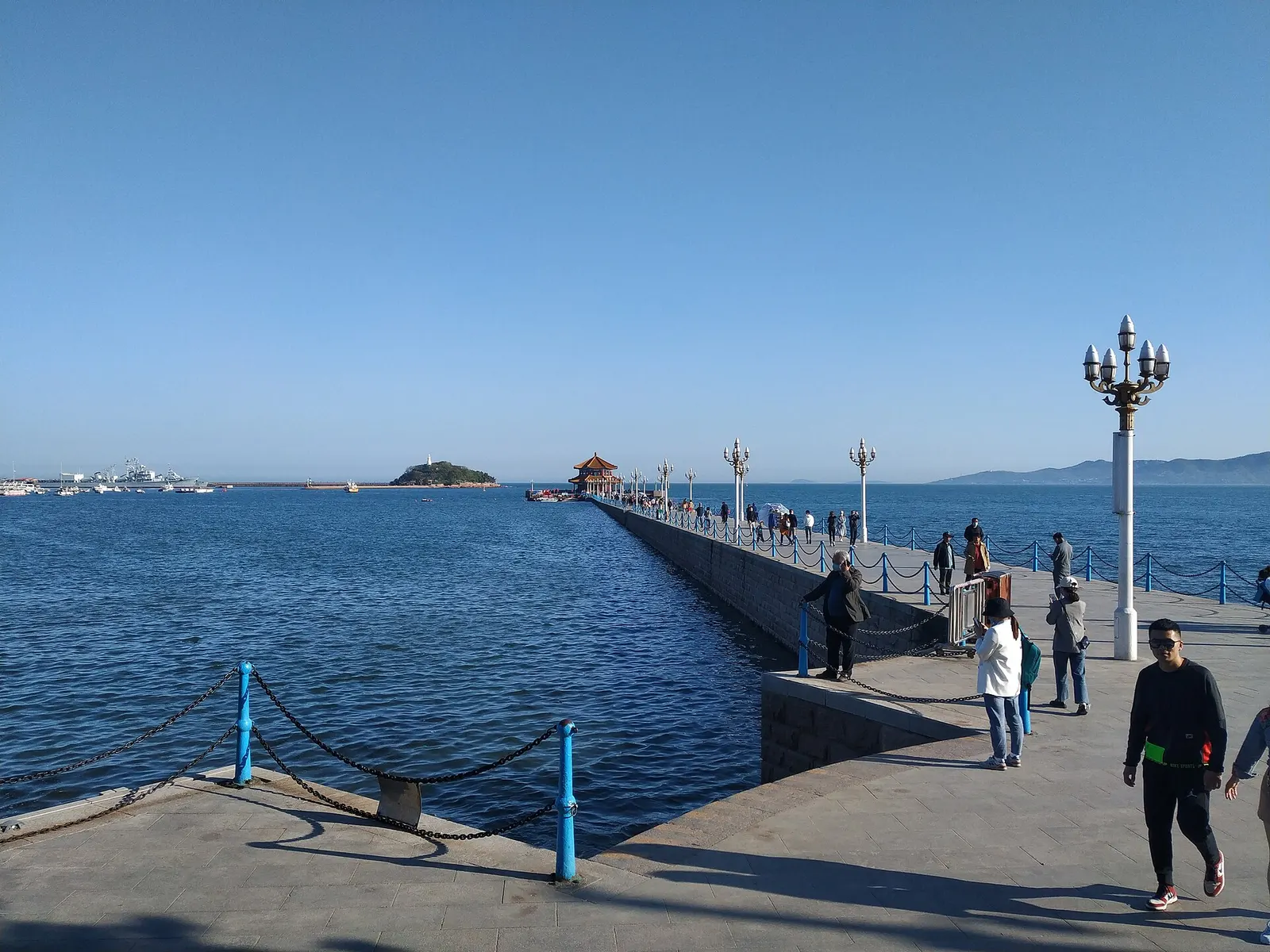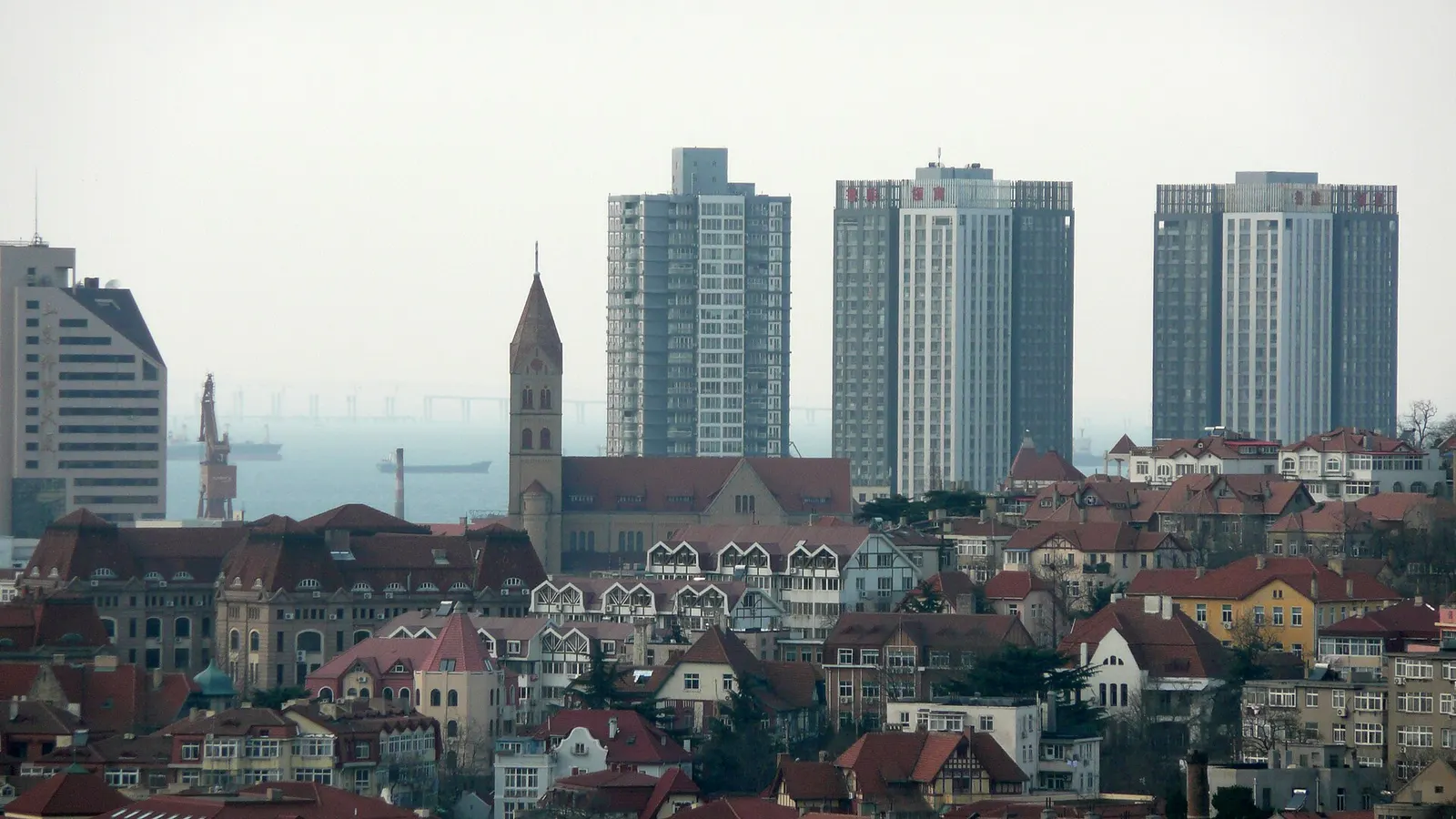
Qingdao's appeal is the combination of early-modern architecture, a coastline pressed against the city, and a daily life that treats beer as ordinary. June to September is the most comfortable stretch. One day covers the old town and the pier, two add Badaguan and the beer museum, and three bring in Mount Lao. Staying in the old town near the station saves the most time, and watch for rip currents at the beach (checked 28 September 2026).
Among China's coastal cities, Qingdao is the one most easily mistaken for a beach resort. It has sand, sea breeze and a summer made for escaping the heat — but what actually makes it distinctive is another set of things: a German and early-modern old town, a coastline pressed right against the city, and beer treated as part of ordinary life。
Put those three together and Qingdao becomes interesting. The red tile roofs, granite facades and sloping lanes of the old town are physical traces of modern urban history; the shade and villas of Badaguan make the most comfortable stretch of walking in the city; and draught beer sold in plastic bags at the roadside is a daily scene no other Chinese city offers.
Qingdao is also one of the few northern Chinese cities where the city itself is made for slow walking. Its sights do not depend on queues or bookings: one day takes the old town and the seafront, the next turns towards Badaguan or Mount Lao. For anyone who has spent days moving fast on a long route, Qingdao is often a comfortable breather.
This guide is for travellers placing Qingdao in a 7 to 12 day China route: how many days it needs, how to walk the old town, how to arrange the coast, what to skip, where to stay, and practical matters such as beach safety.
Is Qingdao right for a first trip to China?
Yes, especially if two things apply: there is a northern city in your plan (Beijing or Jinan), and you like the unhurried rhythm of walking in a city and looking at the sea. Qingdao is easy to handle — the old town and Badaguan both suit walking, and the metro and buses cover the main areas.
How many days does Qingdao need?
Two days is comfortable; one only covers the main line.
- One day: the pier, the old town around the church and Zhongshan Road, then a walk by the sea in the evening. You get the impression of the city, but neither Badaguan nor Mount Lao.
- Two days: Badaguan, the second bathing beach and the beer museum on day two — that completes both faces of Qingdao.
- Three days: add a day for Mount Lao; the mix of mountain and sea is worth it, but it needs full time.
- 4 days or more: add the Huangdao direction or Jimo hot springs, or extend to Jinan and Tai'an for a Shandong section.
What to see first, and what to skip
The test in Qingdao is whether this space could exist only in this early-modern port city, not whether a place appears on a list.
| Place | For a first visit | Why |
| The old town (around the former governor's residence and the Catholic church) | Must go | The densest stretch of early-modern architecture, and the best walking experience |
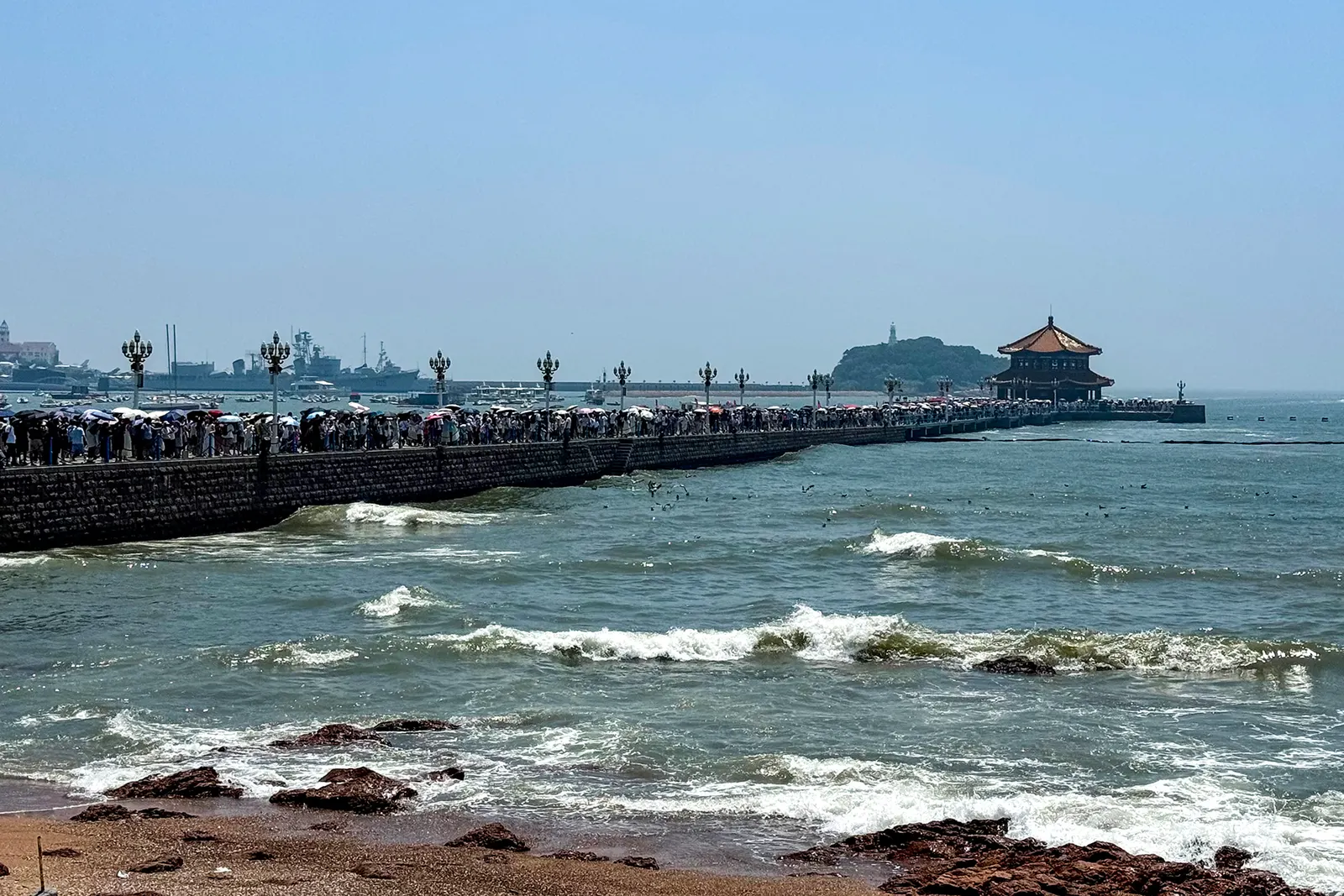
| Zhanqiao Pier and Huilan Pavilion | Must go | Qingdao's city symbol — a long pier reaching out into the sea |
| Badaguan | Strongly recommended | A walking area of shade and villas; half a day is right for it |
| The second bathing beach | Advice | The most comfortable stretch of coast in the city; swimmable in summer |
| The Tsingtao Beer Museum | Advice | The best way to understand why beer is part of daily life in Qingdao |
| Laoshan | Separate day | Mountain-and-sea scenery completely unlike the city; needs a full day |
| Zhongshan Road commercial street | Pass through | An old commercial street — fine as you pass through |
| May Fourth Square and the Olympic Sailing Centre | Optional | The modern face of Qingdao; good at night, quiet by day |
| Pichaiyuan | Can skip | Concentrated snacks but touristy, with sharply divided opinions on the food |
| Underwater world attractions and theme parks | Can skip | Little to do with the real coastal experience; better for families with children |
In one line: The old town and the coast are the core of Qingdao, Badaguan is the best walk, Mount Lao is the bonus, and man-made attractions can be skipped.
When to go, and how to dodge the crowds
- June to September: the most comfortable climate, with seawater good for swimming; July and August are peak season (especially during the beer festival), when accommodation and popular beaches get crowded.
- May and October: fewer people and moderate temperatures, good for the old town and walking.
- November to February: cold sea winds and low apparent temperatures, with most seaside activities closed — though the old town's architecture looks good in winter light.
- A seasonal note: Qingdao's fog season falls in late spring and early summer, when sea fog blocks the view; when typhoons track north, warning lines go up along the shore.
Avoiding crowds means Change the hour and the direction: the pier and old town are most comfortable before nine in the morning; Badaguan is never crowded and is best late in the day; the bathing beaches are busiest in the afternoon and pleasant at dawn and dusk; and book city accommodation early during the beer festival. Opening hours and ticketing at beaches and museums can change each year — check official channels before you travel (this article was reviewed on 28 September 2026).
Which area to stay in on a first visit
- Old town / around the railway station: walkable to the pier and the old town, the most time-efficient base for a first visit, with many hotels converted from old buildings.
- Olympic Sailing Centre / May Fourth Square: the modern city centre with good sea and night views, though the old town means a metro ride or taxi.
- Badaguan / around the bathing beaches: quiet and green, good if walking is your priority, with fewer dining options.
- Around Qingdao North Railway Station: fine for travellers using Qingdao as a stopover of less than a day.
Getting to Qingdao and getting around
Into the city. Qingdao Jiaodong International Airport (TAO) is some distance from the city, with metro and airport buses into town; high-speed trains mostly stop at Qingdao station (right beside the old town) and Qingdao North, with direct services from Beijing, Jinan and Shanghai. Exact services are subject to the latest official announcements. Stay in the old town and Qingdao station puts you within walking distance of the pier.
Within the city. The metro and buses cover the old town, Badaguan and the Olympic Sailing Centre; the old town has plenty of slopes, so wear comfortable shoes. Paying by QR code means activating the transport code in Alipay or WeChat Pay first — how to do that is covered here: how to pay in China and the travel apps foreign visitors use. Cycling and taxis along the coast are easy, though peak-season taxis take a while.
To Mount Lao. From the city you reach Mount Lao by metro plus bus or by taxi; allow time for the mountain roads and the internal transport, since the scenic area is large. Tickets and boarding are covered here: how to travel by high-speed rail in China.
What to arrange before you land
- Confirm your visa or visa-free eligibility. Qingdao is one of the main entry points and eligible cities, but the visa-free and transit exemptions carry specific day limits and conditions, and they change: how to apply for a China tourist visa.
- Check the flags before swimming. Swim only at official beaches with lifeguards on duty, and follow the warning flags and announcements; do not enter the water at rocky areas or unpatrolled beaches.
- Prepare two ways to pay. Mobile payment first, cash and a physical card as backup; small shops and night-market stalls lean more heavily on QR codes. The general pre-departure checklist is here.
- Check the beer festival dates. The summer beer festival is Qingdao at its busiest, with tight accommodation and transport — keep the plan flexible.
- Adjust when the fog comes in. Sea fog blocks the views, so on foggy days move the old town, museums and indoor stops earlier.
- Network and connectivity. Maps, ride-hailing and translation all depend on data, so decide in advance between an eSIM, a local SIM and roaming: choosing between an eSIM, a physical SIM and roaming.
How Qingdao fits into a longer trip
- Beijing + Qingdao: linked by high-speed rail, joining the northern history section with the coast; for the Beijing half, see first time in Beijing: what to see, where to stay and how many days.
- Qingdao + Jinan / Mount Tai: one city and one mountain in Shandong, needing one or two extra days.
- Qingdao + Shanghai / Nanjing / Suzhou: south into the east China line by high-speed rail, good for the middle or later part of a long route.
- Qingdao alone as a summer retreat: if you simply want an unhurried city in summer, three days in Qingdao is comfortable.
If you would prefer someone to line up transport, tickets and hotels, start with our China inbound tours page; to adjust it to your dates and group size, tell us the dates and the number of travellers: contact us.
Frequently Asked Questions
When is the Qingdao beer festival? It is usually held in summer, with dates and venues announced each year — check official information. City hotels get noticeably tighter during that period, and the main venue has traffic controls.
Can I enjoy the coast if I cannot swim? Yes. Most of Qingdao's coastal experience is walking, sea views and photography: the pier, Badaguan and the seaside paths all need no swimming. Swim only in designated beach areas and watch for rip-current warnings.
Is the old town hilly? It has some gradient, especially around the church and the former governor's residence, so wear comfortable shoes and allow rest stops; with older travellers, use taxis instead of long walks.
Do I need to tip in Qingdao? No. Restaurants and hotels do not expect tips, and some bills already include a service charge.
Closing thoughts
Qingdao is a city of combinations: the old town supplies historical traces, the coast supplies relaxation, and beer and seafood supply a sense of the ordinary. It does not overwhelm; it eases. An hour under the trees at Badaguan, half an hour of sea breeze by the pier, a glass of fresh draught beer at a roadside shop — those are the most valuable parts of Qingdao.
Here is an order a first-time visitor can follow: confirm your visa or visa-free eligibility, book a hotel in the old town or near the station, walk the old town, the church and the pier on day one with a seaside walk in the evening; on day two take Badaguan and the beer museum, and swim if the season allows; with another day, add Mount Lao. In summer book accommodation early, and check the warning flags at the beach.
Treat Qingdao as just another northern seaside city and you will underrate it; treat it as a combination of early-modern architecture and coastal daily life, and it gives you the most relaxed two or three days of a long itinerary.