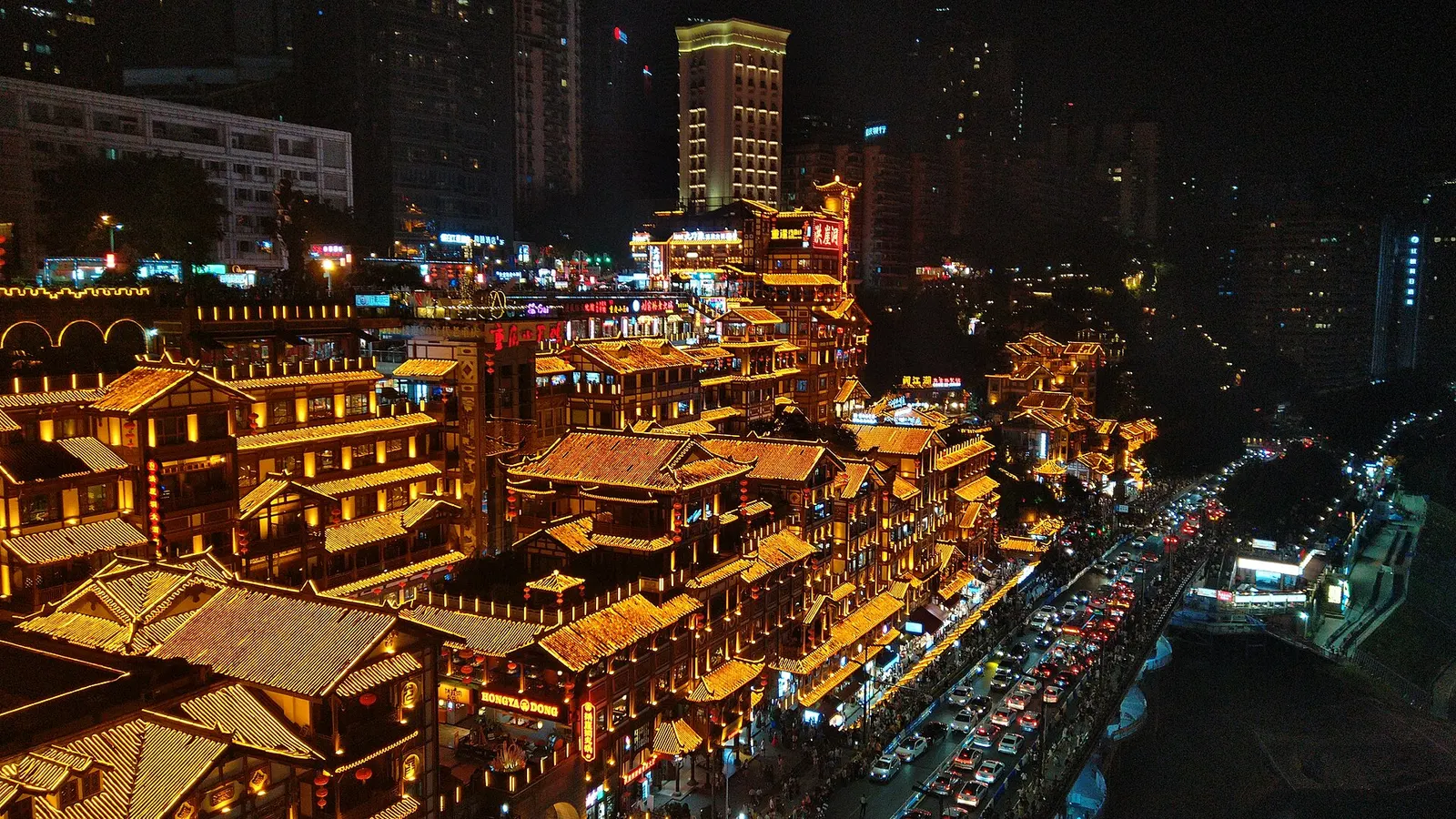
Chongqing is the Chinese city where a sense of direction is most easily defeated: floors do not mean what they mean elsewhere, and navigation apps often fail. Understand the terrain first, then plan: two days for the Hongya Cave night view, the Yangtze cableway and Jiefangbei; three days adds Wulong's Three Natural Bridges or the Dazu rock carvings. Staying around Jiefangbei saves the most time (checked 28 September 2026).
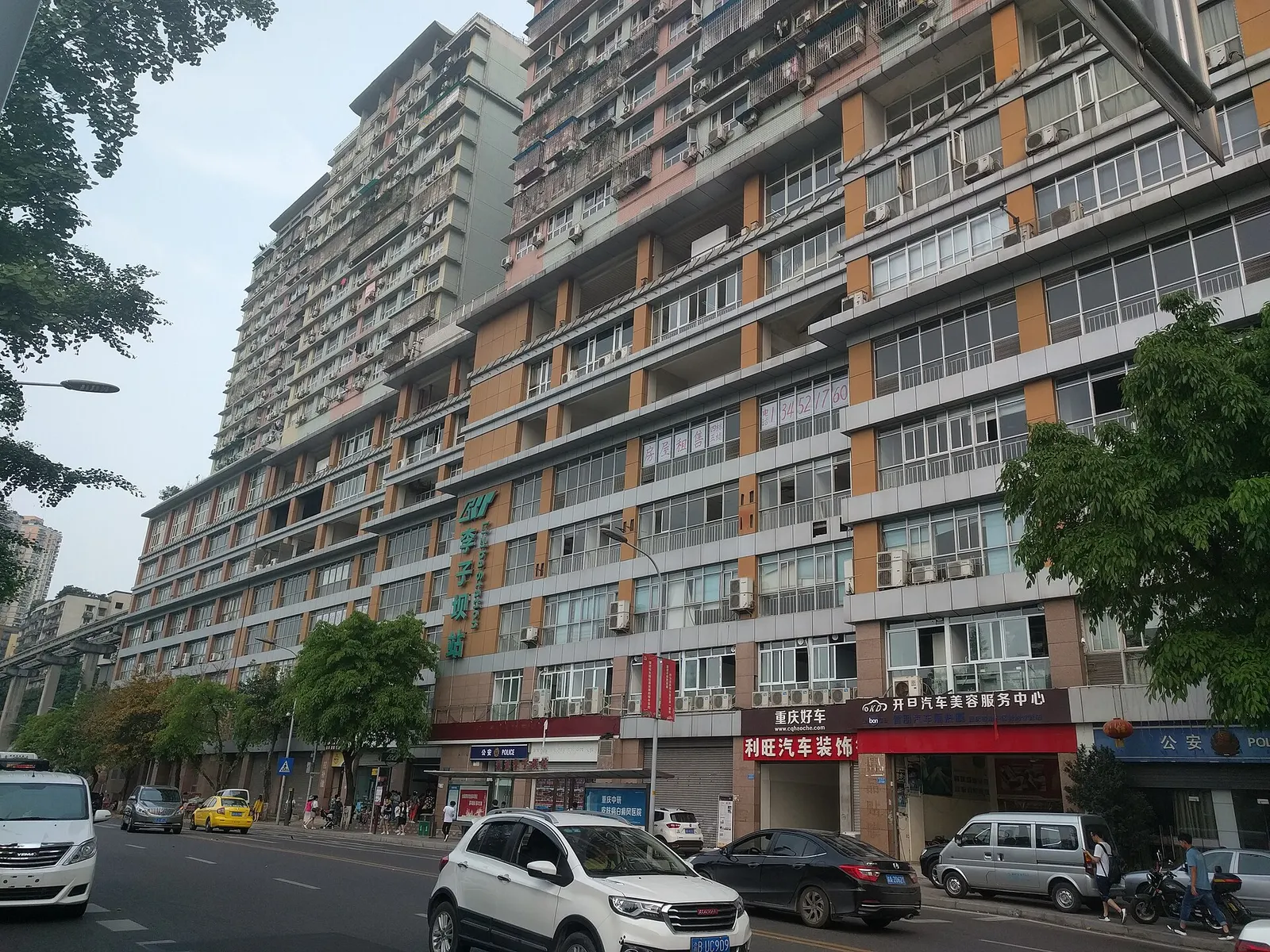
Among Chinese cities, Chongqing is the one where the terrain itself is the attraction. It draws visitors not with a single monument or landmark but with the way the whole city is built between two rivers and countless hills: roads that pass through buildings, a monorail that runs in and out of apartment blocks, a lobby you assumed was the ground floor that turns out to be the twentieth, and walking distances that do not work in the vertical direction.
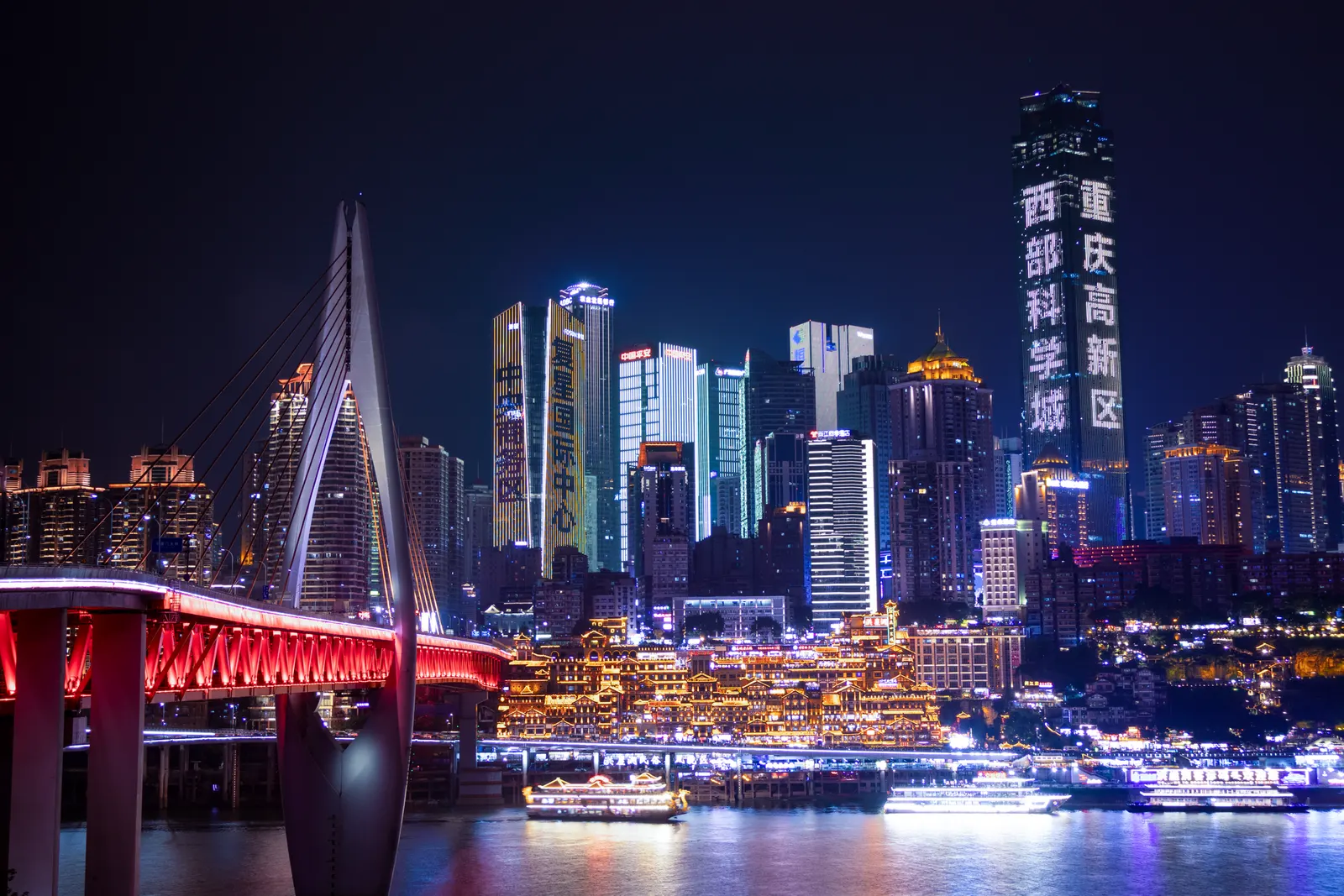
That structure means two things for first-time visitors. First, Chongqing's visual impact is immediate: at night, seen from the river, the lights stack up along the hillsides, and future-city photographs need almost no skill — which is why the city has spread so fast on international social platforms in recent years. Second, its itinerary logic is unlike any other city: straight-line distance means nothing here, and five points that look close together on a map become a hard day of climbing.
So this guide is written differently: first how to read the terrain and move through the city, then what to see, how many days are enough, and where to stay. Add that layer of understanding and Chongqing becomes a memorable trip; skip it and the city is reduced to tiring walks and spicy hotpot.
This guide is for travellers placing Chongqing in a 7 to 12 day China route.
Understand the terrain first
The central districts sit where the Yangtze and Jialing rivers meet, and the city has grown up the hillsides, cut by the water into groups of districts. That leads to three practical conclusions:
- Floors cannot be trusted. Different entrances of the same building can open onto streets at completely different heights. A hotel lobby on floor one may need an elevator up or down to reach the street.
- Distances include the vertical. Eight hundred metres on a map can mean climbing two hundred metres, crossing a shopping mall and walking a stretch of elevated walkway.
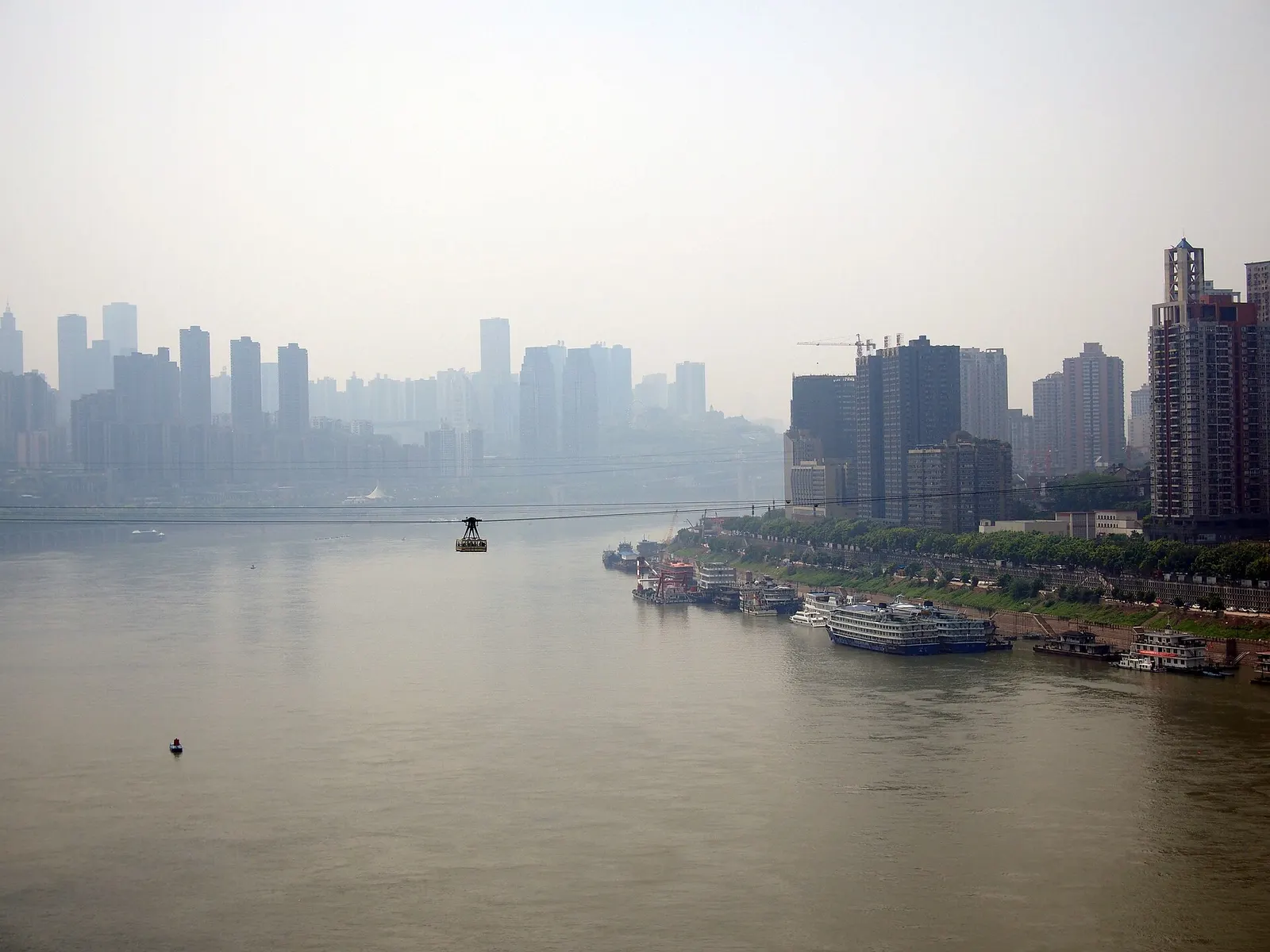
- Crossing the river is part of the itinerary. Reaching the other bank is not only about bridges: the metro, the cableway and the ferries are experiences in themselves.
The practical approach is to treat metro station and exit number as your landmark, then follow the signs and the crowd rather than the arrow on your phone. On Chongqing's pavements, walking navigation generally starts working properly only after you leave the station.
Is Chongqing right for a first trip to China?
Yes, but it works best as a second or third stop, not the only one. Two reasons: its appeal is urban spectacle rather than the world-class historical symbols of the Great Wall, the Terracotta Army or the Forbidden City; and its terrain asks something of your stamina and sense of direction, which is harder on the day you land with jet lag.
Its best position is right after Chengdu. The two are about 1.5 to 2 hours apart by high-speed rail: use Chengdu's slower pace to adjust to China first, then switch to Chongqing's vertical city, and the contrast is striking. How to combine cities and split the days is covered here: which cities to visit on a first trip to China.
How many days does Chongqing need?
Two days is the core minimum; three lets you add one nearby World Heritage site.
- One day: only the riverfront and the night-view line (Jiefangbei, Hongya Cave, the Yangtze cableway), with most of the day spent in transit.
- Two days: Jiefangbei and the Hongya Cave area on day one, then the cableway at dusk for the night view; on day two, Liziba or Ciqikou, the Nanshan viewing platform and the Three Gorges Museum. That covers the core impression.
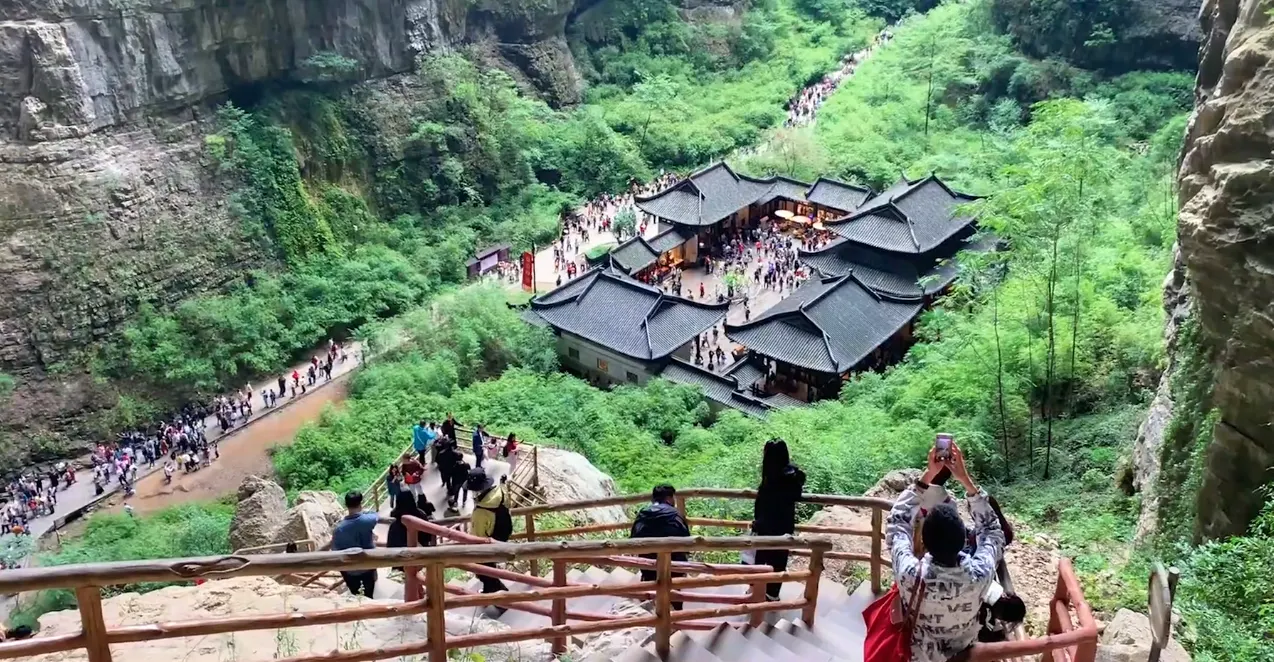
- Three days: add either Wulong's Three Natural Bridges or the Dazu rock carvings. Both lie outside the central districts and need a full day each.
- 4 days or more: you can bring in a Three Gorges cruise segment or the Fuling and Qianjiang directions, or give Chongqing and Chengdu three days each as a Sichuan–Chongqing pair.
What to see first, and what to skip
Chongqing can be judged in one line: look for the space that could not exist anywhere else, not for individual attractions.
| Place | For a first visit | Why |
| Hongya Cave (night view) | Must go | Stilt houses built against the cliff; once lit, this is the image everyone recognises as Chongqing |
| The Yangtze River cableway | Strongly recommended | A unique view across the river, and still a local commuting route |
| Jiefangbei and Bayi Food Street | Advice | The city centre, dense with snacks, a good place to start an evening route |
| Liziba monorail station | On the way | The train-through-building shot — worth a look, no need to linger |
| the Yikeshu (One Tree) viewing platform on Nanshan | Advice | The best spot for the whole Yuzhong peninsula; go as darkness falls |
| Three Gorges Museum | Optional | An indoor option for understanding the Three Gorges and Chongqing's history; good on rainy days |
| Ciqikou old town | Can skip | Heavily commercialised and repetitive; skip it if time is short |
| Chaotianmen and Raffles City | Pass through | Where the two rivers meet, a landmark stretch for walking and photographs |
| Wulong Three Natural Bridges | Separate day | The representative karst landscape; worth a full day |
| Dazu rock carvings | Separate day | Outstanding stone carving, but in the opposite direction from the city centre — do not pair them in one day |
In one line: Chongqing is about how a city grows between mountains and rivers; the night viewpoints are the main event, and heritage sites need days of their own.
When to go, and how to dodge the crowds
- March to April: comfortable temperatures — Chongqing's most pleasant stretch of the year.
- October to November: dry, clear autumn weather, the best light for night views and long walks.
- June to September: extremely hot. Chongqing's summer is nicknamed the furnace, and long hours outdoors cost a lot of energy; keep to early morning and night in this period.
- December to February: damp, cold and foggy, with the fog eating into night views; the upside is thin crowds and low prices.
Avoiding crowds here is also a different hour: Hongya Cave and the Nanshan platform are at their most crowded after dark, with holiday nights almost impassable; the Yangtze cableway queue varies greatly by time of day; the viewing deck at Liziba is busiest when trains are frequent and quietest at dawn. Opening hours, cableway operations and booking rules can change — check official channels before you travel (this article was reviewed on 28 September 2026).
Which area to stay in on a first visit
- Around Jiefangbei: the most convenient base for a first visit, walkable to Hongya Cave, the cableway and metro stations, dense with restaurants, at mid-to-high prices.
- Guanyinqiao (Jiangbei): stronger shopping and nightlife with plenty of hotels, though reaching Jiefangbei means crossing the river.
- Along Nanbin Road: facing the Yuzhong peninsula, the best views from your room, ideal if the night skyline is the main point; daytime trips elsewhere take a little longer.
- Around Chongqing North Railway Station: fine for travellers using Chongqing as a stopover of less than a day, but the city experience is limited.
Confirm the hotel accepts foreign guests, and check which level the entrance is on — Chongqing's floor problem starts at the booking stage. How to choose a booking platform is covered here: how to book hotels in China.
Getting to Chongqing and getting around
Into the city. Chongqing Jiangbei International Airport (CKG) connects to the city by rail; high-speed trains mostly arrive at Chongqing North and Chongqing West, with direct services from Chengdu, Xi'an and Guiyang. Exact services and routes are subject to the latest official announcements.
Within the city. Rail is the default, and Chongqing's system includes monorail lines worth riding for their own sake — through buildings and over rivers. Paying by QR code means activating the transport code in Alipay or WeChat Pay first — how to do that is covered here: how to pay in China and the travel apps foreign visitors use. Taxis and ride-hailing are cheap, though cross-river routes jam at peak times; the cableway and ferries are experience transport and can be planned as sights in their own right.
To Wulong or Dazu. Both require leaving the central districts: Wulong has high-speed rail and tourist coaches with officially published timetables, while Dazu is reached mainly by high-speed rail plus a local connection. Day returns are rushed; give each a full day. Buying tickets and boarding are covered here: how to travel by high-speed rail in China.
What to arrange before you land
- Confirm your visa or visa-free eligibility. Chongqing is one of the main entry points and eligible cities, but the visa-free and transit exemptions carry specific day limits and conditions, and they change: how to apply for a China tourist visa.
- Build in time to adjust to the terrain. Leave slack in your first day — do not schedule five stops on the day you land.
- Prepare two ways to pay. Mobile payment first, cash and a physical card as backup; small noodle shops, cableway ticket offices and some older businesses may take only cash or a QR code. The general pre-departure checklist is here.
- Be clear about the spice level in hotpot. Ask for a split pot with plain broth on one side, or choose clear broth outright; beef-tallow bases are heavy on the stomach, so start with a small taste if it is your first time.
- Network and connectivity. Maps are less reliable in Chongqing, but ride-hailing, translation and payment still depend on data, so decide in advance between an eSIM, a local SIM and roaming: choosing between an eSIM, a physical SIM and roaming.
- Recheck the details that change. Cableway operating hours, viewing-platform access and booking rules can change; check official channels before you travel (this article was reviewed on 28 September 2026).
How Chongqing fits into a longer trip
- Chengdu + Chongqing: the shortest and smoothest pairing, about 1.5 to 2 hours by high-speed rail, two to three days each; for the Chengdu half, see first time in Chengdu: pandas, Sichuan food and how many days.
- Xi'an + Chengdu + Chongqing: history plus two very different southwestern cities, comfortable in 8 to 10 days.
- Chongqing + a Three Gorges cruise: head east downstream for a different rhythm; sailings and boarding ports are subject to official announcements.
- Chongqing + Shanghai / Beijing: on a long route, Chongqing usually closes the southwestern section, with a flight or train into the next one.
If you would prefer someone to line up transport, tickets and hotels, start with our China inbound tours page; to adjust it to your dates and group size, tell us the dates and the number of travellers: contact us.
Frequently Asked Questions
Is Chongqing safe at night? The main commercial districts and riverside walks are busy and generally safe after dark. What to watch is your belongings in crowds, stretches where drinking crowds gather, and detours by taxi — booking through the app and checking the route is the easiest safeguard.
What if it rains? Chongqing gets a lot of rain, so put the Three Gorges Museum, malls and the train-through-building spots on rainy days; night views suffer in rain, so move them to the next day.
Do I have to eat hotpot? No. Chongqing's noodles, wontons and jianghu dishes do not depend on hotpot; if you do not eat chilli, clear-broth wontons, steamed dishes and some soups work well — just say so when ordering.
If I can only visit one, Chongqing or Chengdu? For pandas, an easier pace and family travel, choose Chengdu; for vertical urban spectacle, night views and a stronger local character, choose Chongqing. If time allows, doing both together is the best value.
Closing thoughts
Chongqing is a city you understand before you tour it. Its value is not the fame of any single sight but the way the city wrestles with its terrain: trains through buildings, stilt houses against cliffs, roads spiralling upwards, rivers cutting the centre into pieces. Once you grasp that structure you start noticing which level you are on, which district lies across the water, where this cableway leads — and that is the best part of Chongqing.
Here is an order a first-time visitor can follow: confirm your visa or visa-free eligibility, book a hotel near Jiefangbei or along Nanbin Road, give the first day to the night route of Jiefangbei, Hongya Cave and the cableway, decide on day two between Ciqikou and the Three Gorges Museum, then choose Wulong or Dazu on day three according to your energy. Keep each day to three or four stops, and leave time for getting the direction wrong.
With one day in Chongqing you see its nights. With three, you begin to see why it grew into this shape.