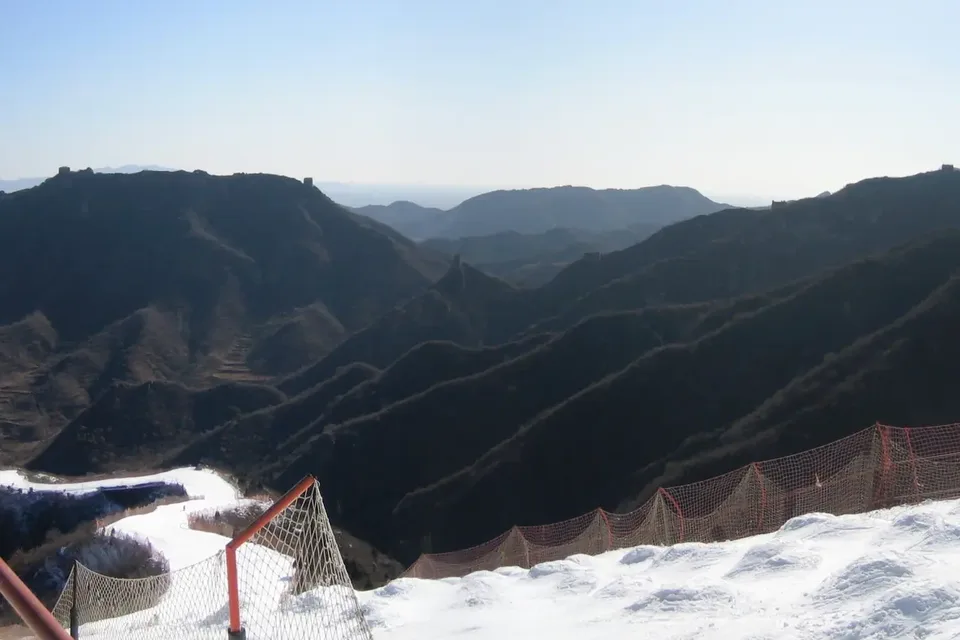
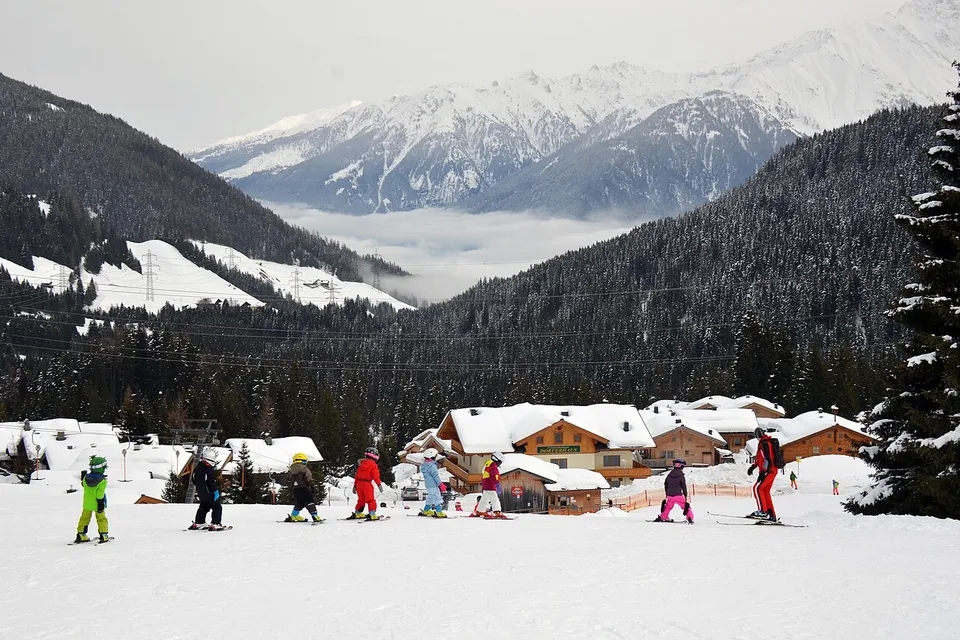
Which Beijing-area resorts work for a single-day trip? This guide compares Nanshan, Jundushan, Huaibei, Yuyang, Shijinglong and Jingzhihu by location, terrain and the skiers they suit, and covers planning with children, night skiing and a pre-departure checklist.
The great advantage of the resorts around Beijing is distance. From the city, an hour or two of driving puts you on snow and you can be back in the afternoon without missing work the next day, something neither Chongli nor the Northeast can match. The trade-offs are clear too. The season here depends on machine-made snow and gets riskier toward the end, terrain is mostly beginner and intermediate, and the sites are smaller than purpose-built resorts.
Here is the short answer. For a first ski trip or a single day to test the water, Nanshan and Jundushan are the simplest, with clearly graded runs and teaching concentrated in one place. If you have children and do not want a long drive, look at Nanshan and Jingzhihu, which have more beginner terrain and snow-play areas. To combine skiing with something else, pick by direction: Huaibei if you are heading to Huairou, Shijinglong for Yanqing and Yuyang for Pinggu. If you want lodging, dining and skiing all inside one resort, the Beijing area cannot deliver that and you should look at Chongli. One more thing to accept: weekends and public holidays here are crowded, and the density of beginners on the slopes is far higher than on weekdays, so go early or go midweek if you want room to breathe.
This guide was compiled in September 2026, ahead of the 2026-2027 season. Opening dates, open runs, and pass and night-skiing prices change every year, so confirm with each resort's official announcement before departure.
Which Beijing-area resorts suit which skiers?
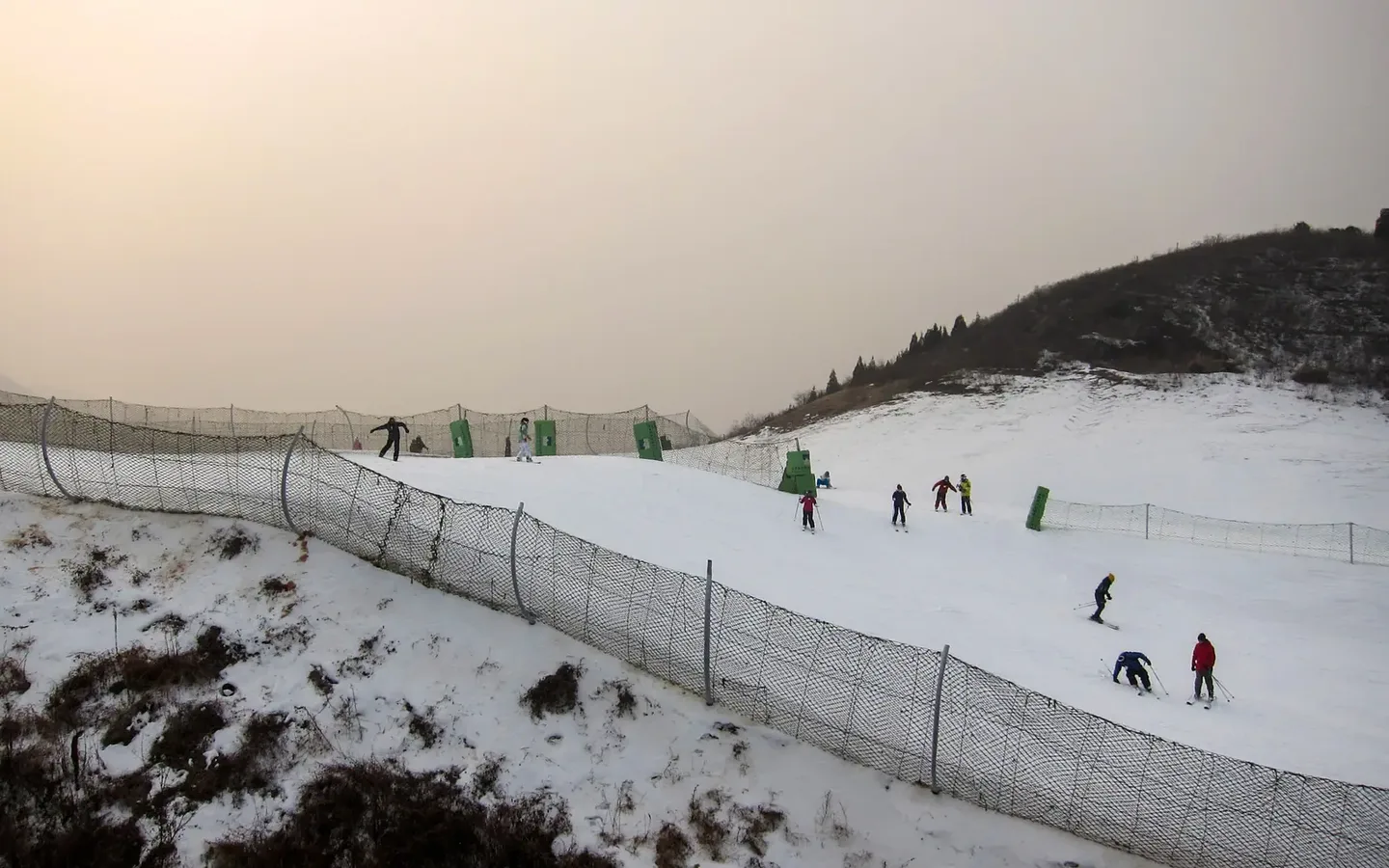
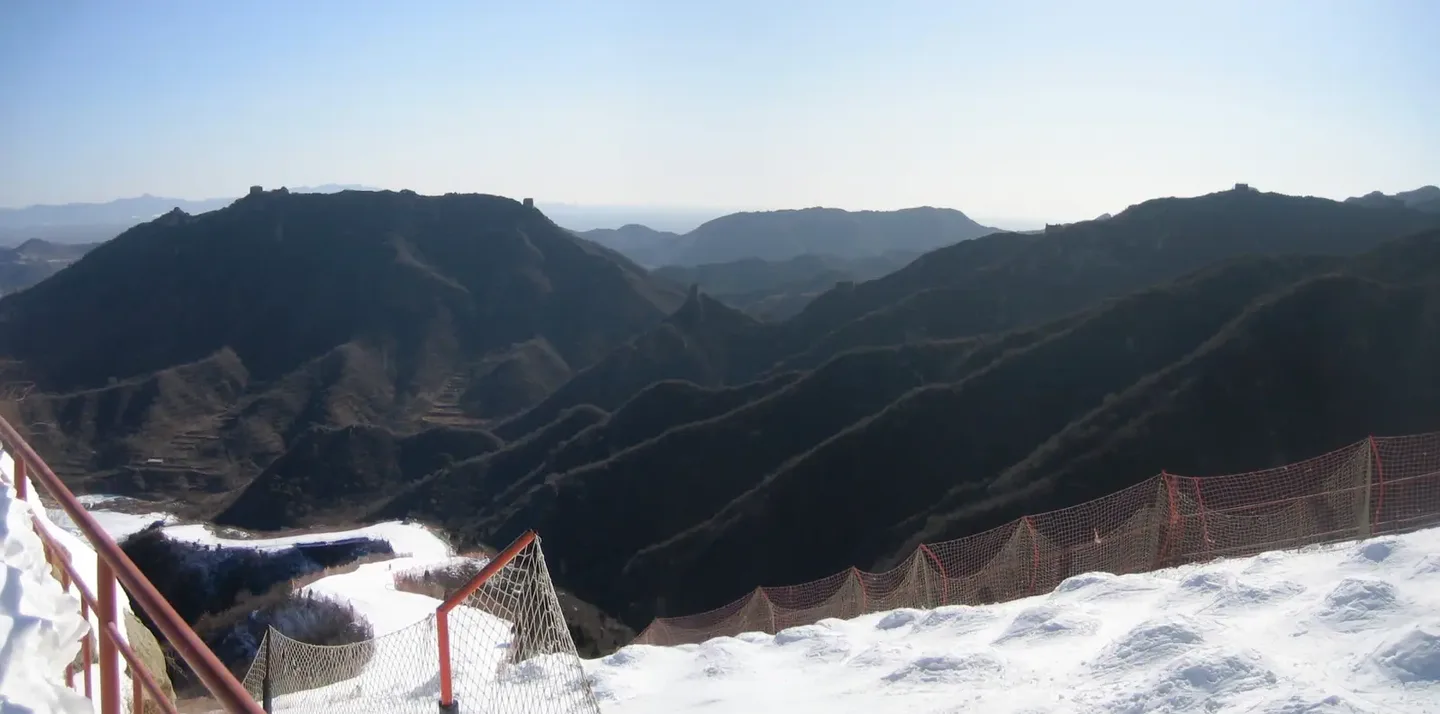
The resorts around Beijing are spread across Changping, Miyun, Huairou, Yanqing and Pinggu, mostly one to two hours away by car and feasible as day trips. They focus on beginner and intermediate terrain and rely on machine-made snow, with seasons generally running from early December to late February or early March, depending on temperatures.
Nanshan: Hanzhaizhen, Miyun, about an hour and a half by car. There are 26 runs across beginner, intermediate, advanced and teaching levels, plus two snow-play runs, with the day session from 9:00 to 17:00 and night skiing from 18:30 to 22:00. In 2024-2025 a weekday full-day pass cost CNY 120, a weekend pass CNY 180 and night skiing CNY 90, and the season opened on 4 December that year. Teaching and park facilities are relatively complete, which suits beginners and snowboarders.
Jundushan: Cuicunzhen, Changping, about an hour by car. Seven runs across beginner, intermediate and advanced levels, with roughly 150,000 sq m of skiable area. The day session runs 8:00 to 18:00 and night skiing 17:00 to 22:00, and the 2024-2025 season opened on 5 December. Night skiing is the main draw, which suits office workers heading out after hours.
Huaibei: Hefangkou, Huaibeizhen, Huairou, about an hour and a half by car. Eleven runs, two beginner and nine intermediate to advanced, with run 10 serving as a terrain park of 1 to 6 m jumps. The day session is 8:30 to 16:30 and night skiing 17:00 to 21:00, and the 2024-2025 season opened on 6 December. It is on the way if you are heading to Huairou.
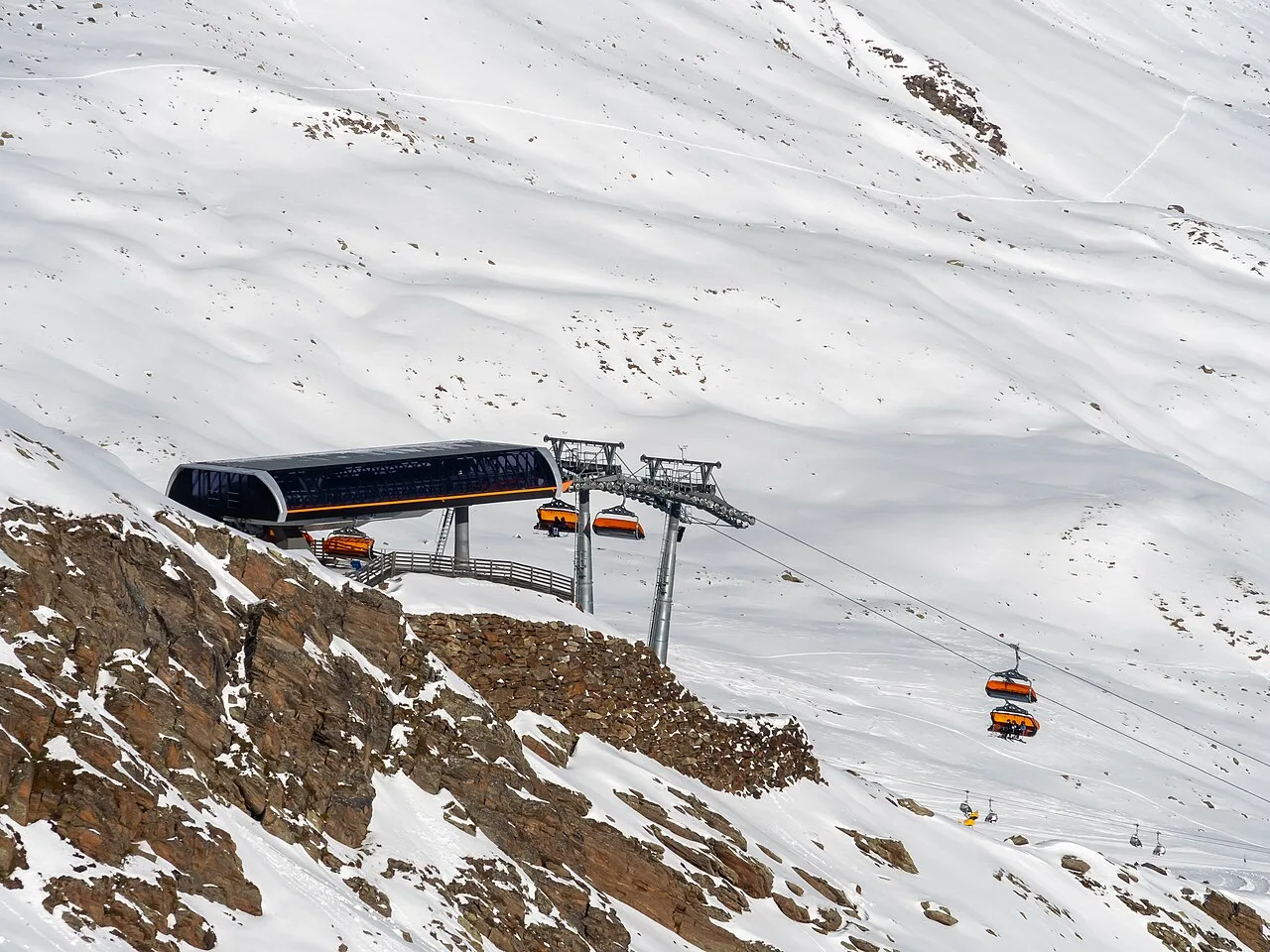
Yuyang: Donggaocunzhen, Pinggu, about two hours by car. Twelve runs across advanced, intermediate and beginner levels, with one two-person and one four-person chairlift. It operates 8:00 to 17:00 and opened on 5 December in the 2024-2025 season. It suits travel toward Pinggu and the site is relatively open.
Shijinglong: Zhangshanyingzhen, Yanqing, about an hour and a half by car. Eleven runs, including a 1,000 m advanced run with a 300 m vertical drop and a maximum pitch of 30 degrees, and a 600 m intermediate run with a 135 m drop. The day session is 9:00 to 17:00 and night skiing 17:30 to 20:30, and the 2025-2026 season opened on 29 November. It suits beginners and families.
Jingzhihu: Xingshouzhen, Changping, about an hour by car. Two beginner runs, one intermediate run and one teaching run, plus a children's slope at about 6 degrees. The day session is 9:00 to 16:30 and night skiing 18:00 to 21:30, and the 2024-2025 season opened on 4 December. It is small with an easy pace, suited to first-timers and families.
Driving times assume good conditions. Rain, snow and the morning rush on the Third and Fourth Ring Roads can double them. Before choosing a resort, look at which direction traffic leaves the city on a weekend morning; that is more useful than a trail map.
One thing to sort out on price: most Beijing-area resorts charge admission and ski passes separately, so the ticket at the gate is often only entry, with time on snow, gear and lifts billed on top. Published figures are scarce, and Nanshan's 2024-2025 rates of CNY 120 for a weekday full-day pass, CNY 180 at weekends and CNY 90 for night skiing are a useful order of magnitude. For Jundushan, Huaibei, Yuyang, Shijinglong and Jingzhihu, confirm current prices through each resort's official channel. On the same day, weekday and weekend prices often differ by nearly double, and night skiing is usually cheapest.
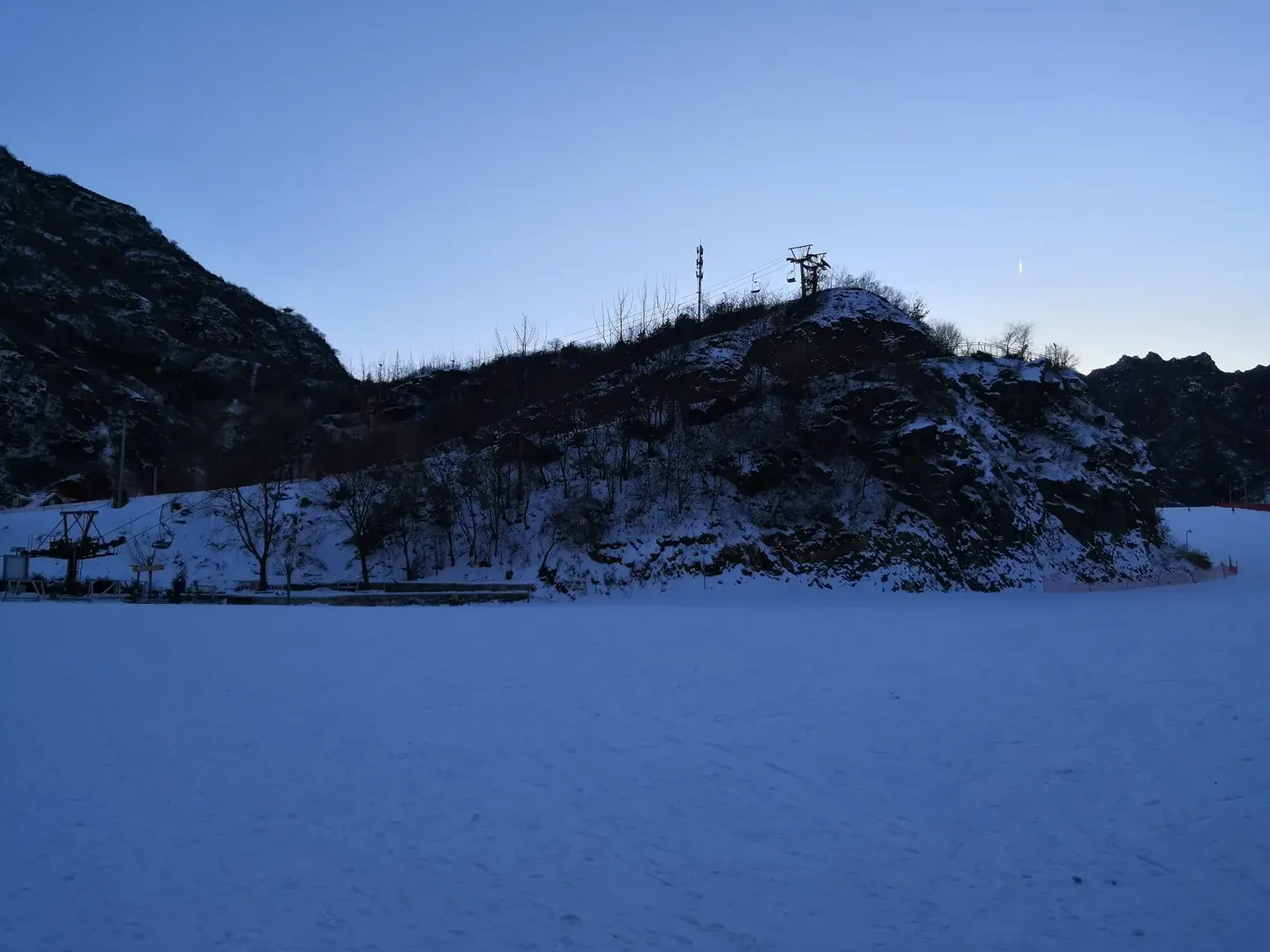
Nanshan or Jundushan?
Both are among the best-known resorts around Beijing, but they solve different problems.
Nanshan grades its terrain completely, from beginner to advanced, and its snowboard park and teaching resources are the selling point. It suits people who want to learn properly and are willing to spend a full day on the hill. It sits in Miyun, which means a longer drive out of the city, and combined with peak-season crowds you usually need to leave around six or seven in the morning to catch good snow.
Jundushan is close to the city and its biggest advantage is night skiing. Leave after work, ski into the evening and drive back, which is practical if you only have half a day. Night conditions differ from daylight: colder air and harder snow. If you are skiing for the first time, go during the day, when you can see the terrain and instructors are easier to book.
If you have time and want to train properly, choose Nanshan. If your time comes in fragments and you just want a session after work, choose Jundushan.
How should a day with children be planned?
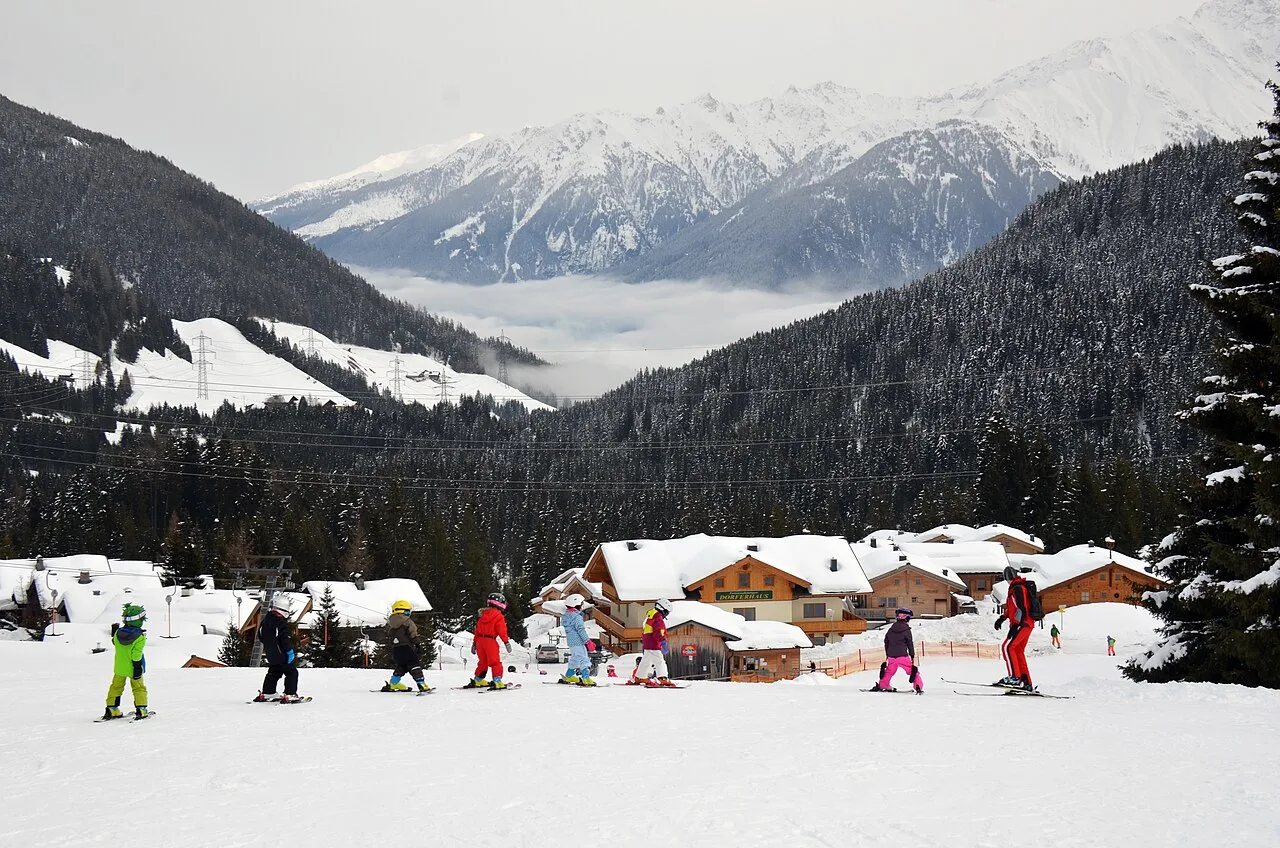
When skiing with children, pace matters more than terrain. The best shape for a day is to arrive in the morning, rent gear and take a beginner lesson, break for lunch, ski another hour or two in the afternoon, and head home around three. Filling every hour instead leaves children cold and waiting, and they will not want to come back the next day.
When choosing a resort, look at three things: whether there is a separate children's teaching area, whether snow-play activities cost extra, and how far the rest and dining areas are from the slopes. Nanshan's teaching resources and snow-play areas are relatively complete, while Jingzhihu is small with lighter crowds, which is friendlier for younger children. On gear, do not skimp on children's goggles, helmets and waterproof gloves, and check ahead by phone, because rental sizes sometimes run out.
If older family members are coming but not skiing, do not expect much to do on site. Resorts around Beijing are essentially places you ski and leave, so putting older relatives up in the city is more comfortable.
When to go, and is night skiing worth it?
The steadiest window is mid-December to early February, when temperatures are low enough for snowmaking and snow retention. January school holidays and the days around Spring Festival are the busiest, with beginners concentrated on the slopes and a higher chance of collisions, so leave earlier at weekends. From late February the daytime warm-up softens the snow, and late-season conditions depend on the weather that week.
Night skiing suits two groups: skiers who can already ride independently and want to avoid daytime crowds, and people whose only free time is a weekday evening. Temperatures are lower and the snow is harder, so add a layer and switch to high-transmission goggle lenses, otherwise you cannot read the terrain. Night skiing is not recommended with children.
Pre-Departure Checklist
Confirm each of these before departure. Opening and closing times and which runs are open that day. Whether the pass includes gear, a helmet and lockers. Whether beginner lessons need booking, and whether the instructor teaches skiing or snowboarding. How far the car park is from the ski hall. Whether night skiing is running and when the last session ends. The weather and road conditions that day.
Three safety points to add. Wear a helmet, and rent hip and knee pads while you are learning. Only ski runs that match your level, and do not follow others onto terrain beyond you. Confirm before departure that your insurance covers ski-related rescue and medical care. For how to rent gear, what slope etiquette looks like and what to practise first, the site's first-time skiing preparation guide goes into more detail.
Data sources and review notes
The run counts, drops, opening hours and opening dates quoted above are compiled from a Beijing culture and tourism department guide to ski resorts around the capital, resort websites and published ticketing information. The review date is 21 September 2026, and prices reference published figures from the 2024-2025 season. Beijing-area resorts rely on machine-made snow, so opening dates shift with the year's temperatures and some resorts open their runs in stages. Opening dates, open runs, and pass and night-skiing prices for the 2026-2027 season are subject to each resort's latest official announcement.
Even one day is worth getting the basics right
The resorts around Beijing are about practising close to home, not about being the biggest or the best. Nanshan suits serious practice, Jundushan suits night skiing after work, Huaibei, Shijinglong and Yuyang are chosen by direction, and Jingzhihu suits beginners and families. Treat them as places to build skills, and once your technique is steady, consider Chongli, the Northeast or Xinjiang for bigger terrain. The order works better that way.
On a one-day ski trip, the easiest things to lose track of are travel time and queueing time. Leaving half an hour earlier can add a full hour on the slopes. There is also a sum worth doing in advance: passes, gear rental and parking add up, and a day is not cheap, while weekdays and night sessions usually cost less than a weekend daytime pass. Choosing the right time can save enough for another half day of skiing. If you want a Beijing-area ski trip built around your group size, level and schedule, or want to plan Chongli and the Northeast next, reach us through Contact Us to talk with a 0765trip travel advisor. For 2026-2027 opening and closing dates, pass prices and operating ranges, please refer to each resort's latest official announcement.